
Podcast Episode #6
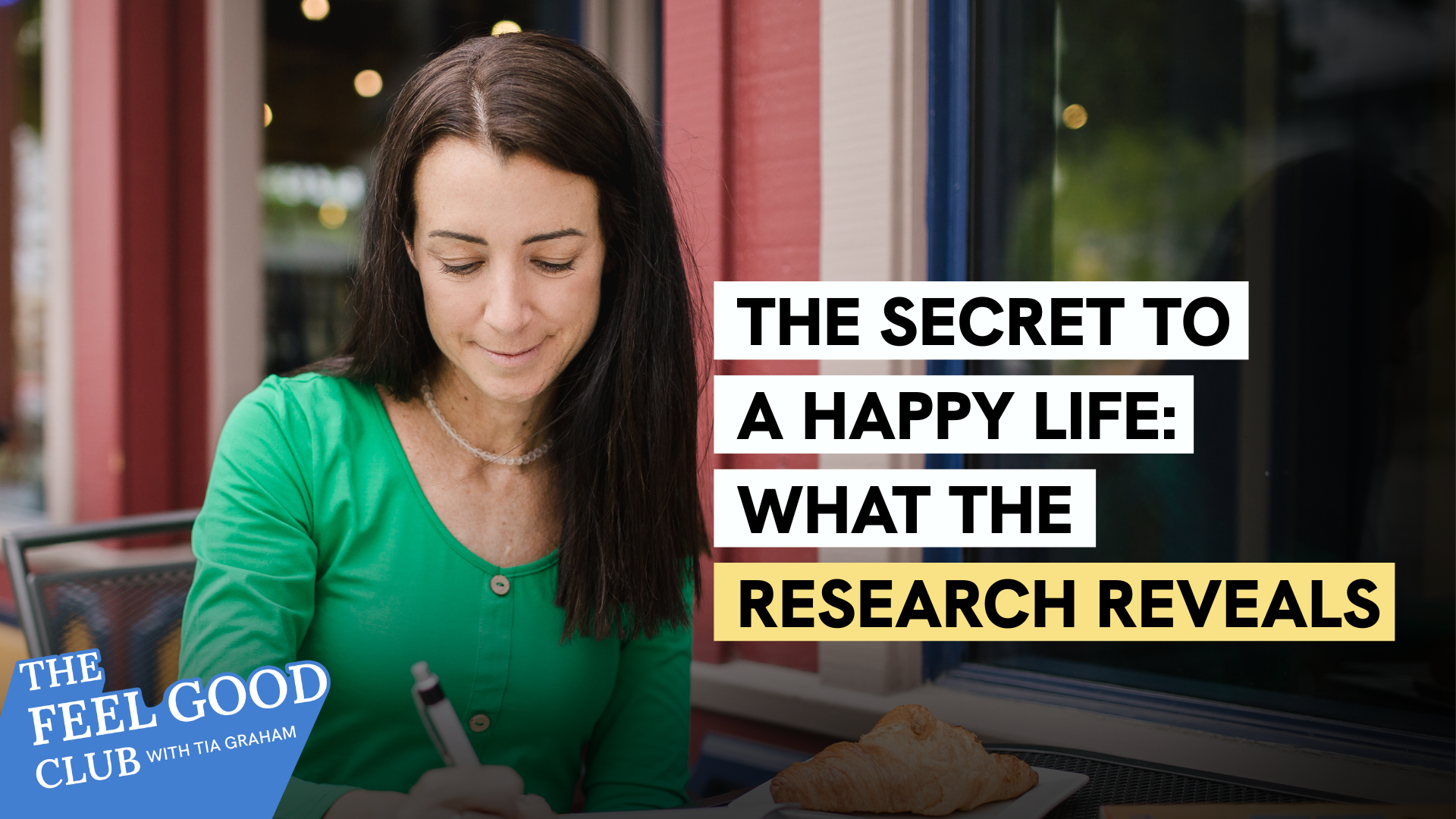



Unlocking Happiness: Practical Strategies for Working Moms
The Reality for Working Moms
Working moms are often stretched thin, juggling career demands, family needs, and the pressure to “do it all” without burning out. Positive psychology expert Tia Graham explains that happiness isn’t just a random emotion or a reward you earn after reaching a milestone, it’s something you can build intentionally through small, consistent choices.
Why “Chasing Happiness” Doesn’t Work
Tia highlights how many of us are taught to chase happiness through external wins like promotions, productivity, or buying something new. But those boosts tend to fade quickly, keeping us stuck on the “hedonic treadmill” where we’re always striving for the next thing. Add comparison and our brain’s natural negativity bias, and stress can easily overshadow joy unless we actively create space for well-being.
Three Practical Shifts You Can Start This Week
Prioritize your “meds.” Focus on meditation, movement, nourishing food, and adequate sleep, because these basics regulate your mood and make everything feel more manageable.
Protect human connection. Strong relationships are one of the biggest predictors of long-term happiness, and even short, intentional moments of presence with the people you love matter.
Build in “joy boosters.” Make time for small activities that genuinely light you up, like nature, music, learning something new, or any simple reset that brings you joy.
A More Sustainable Definition of Happiness
Tia’s message is reassuring: you don’t need to be happy all the time to live a good life. The goal is to create more moments of meaning, connection, and calm through habits that support your brain and body, especially in seasons that feel demanding.
HERE ARE THE 3 KEY TAKEAWAYS FROM THIS EPISODE:
1️⃣ Stop outsourcing happiness to “someday.”
2️⃣ Treat self-care like a foundation, not a luxury.
3️⃣ Protect connection and add joy on purpose.
7 STEPS TO OVERCOME MOM GUILT
Grab the FREE 7 STEPS TO OVERCOMING MOM GUILT
This free resource will help you change your mindset and change how you plan your time.
“You are not stuck and you can increase your happiness and improve your well-being by understanding the science of happiness and applying it.”
Full Transcript
Tia Graham (00:04.436)
You are not stuck and you can increase your happiness and improve your well-being by understanding the science of happiness and applying it. The science of happiness is also known as positive psychology. From guilt and burnout to inner calm and joy. I'm going to give you three science-backed shifts.
every working mom can make in the next week and I know that you are going to feel happier by implementing these. You and I were not taught about positive psychology. I know my parents didn't talk about it and you don't realize how much agency you have.
You get many, many messages about how to become happier that are completely wrong, that are misleading, and that steer you in the wrong direction. Some of these are like, get a bigger title at work, you'll be happier. If you have a nicer car or a bigger house, you'll be happier. Or maybe more followers on Instagram or your...
Kid is better at this activity or gets a better grade, you'll be happier, et cetera. And you and I, we're not, I know I wasn't, we're not truly aware and didn't have a complete idea of how much control we actually have over our own happiness. Your brain can work against you and it does work against you, unfortunately.
And our brains were not designed to make us feel happy, right? Our brains are there to have us feel safe and they want to keep us alive. This is why, for example, the news is 99 % negative because that is what our brain is attracted to. Even though there's a lot of positive news happening in the world, that's an aside, right? So it's also our brain has a monkey mind.
Tia Graham (02:30.05)
We have 30 to 60,000 thoughts a day. It's very, very hard to be present and worrying about the past and worrying about the future. That makes us unhappy, this monkey mind. Our brain also constantly compares ourselves against other working moms. Maybe it's your sister, maybe it was your mom, maybe it's your colleagues, maybe it's your friends. And of course, social media exasperates this and comparison is a thief of joy.
There's also this unfortunate thing that happens in our brain called the hedonic treadmill. So this happens when we get something new. For example, let's say you get that new car and you feel you sort of have this happiness high for about three or four months. And then you go back to your resting level of happiness. It's not permanent, but our brain thinks that when we get these things are
do these things, everything sort of external, that we're gonna have this elevated level of happiness and it's just not true. It only lasts for three or four months. So just remember that. Knowing the hedonic treadmill is very important. Our brains also have a negativity bias. Doesn't that suck? Like that completely sucks. And some people, some working moms have more of a negativity bias than others.
And so what this means is that we, you and I, have to work extra hard at being positive and optimistic. And there's so many more challenges. Those are just some. You are not aware of all of the science and all of the research that can actually increase your happiness. And there's so much, so much goodness. Also, you and I,
are very time poor. Working parents with young children are the most time poor people on the planet. You're juggling career, kids, home, marriage, family, technology, pets, friends, and more. Who has time to focus on happiness when you have a million things to do?
Tia Graham (04:55.51)
and a to-do list that is like a scroll from the Middle Ages. Who has time, right? Many of us, and you might be in this situation, I know I am, have no family or village around us. I live in Southern California and my husband's family and I is around Canada and the United States. No one's even within driving distance. Also recognize that in the United States,
and in other countries, but there isn't a lot of paid time off, right? The systems and organizations and government does not support working moms. Not a lot of maternity or paternity leave. This stat floors me. 41 % of working moms in the United States go back to work after four weeks.
A lot of organizations that don't fully support working moms. There's also the invisible mental load. The majority falls on you. And also, maybe like me, you might have challenging children that have disabilities and take extra care in addition to all the regular parenting duties. So lots of challenges that we're up against, but.
I am an eternal optimist and the science of happiness has transformed my life.
Tia Graham (06:29.378)
There was one night about seven years ago and I came back home to our apartment in West Hollywood and it was my second client night in a row. I was the director of sales and marketing at the London West Hollywood. I had missed the after school time and the bedtime routines and my husband is sharing how the girls were, the toddler and the baby and everything they were doing.
and tears started rolling down my eyes. And I'm saying out loud that I am so stuck. I've been in this career for 15 years. I really love my career. I don't want to be a stay-at-home mom. That's not the journey for me. But I am so unhappy missing so much of the girls' lives.
and I hate that I don't have flexibility and I hate that I can't pick my older one up from preschool and I want to be able to work on my terms but still be really high achieving, still be really career driven. But how do I do that? Because all I know is the hospitality industry. That's what I've done. I went to hotel school, right? And the next day I call one of my friends in New York and again I am
and I'm just saying to her, I am shitty at everything. I am shitty at work, I'm failing at being a mom, I'm not a really good wife, I never see my girlfriends, and it was going on and on and on. And my dear friend, Galit, says, you are not failing. You are just in a new situation, and I think you should call my coach, my life coach, and I was like, what is a life coach? She said, she's amazing, just call her.
and gave me her number. The next day, pick up the phone and call her. And I'm telling her how unhappy I am and how stuck I feel and that I need change, but what can I do because this is all I've done and how can I, know, in being a director of sales and marketing, you don't have flexibility, right? And she's listening, listening, and she says, well, if you weren't doing that, what else would you do? And I said,
Tia Graham (08:54.188)
I've always had this crazy idea. I've had this idea for about 14 years and the only person that knows about it is my husband and my journal. And she goes, well, what's this crazy idea? And I said, the idea is to have a happiness company. And I said, this is really ironic because I'm calling you because I am literally miserable. I'm full of guilt and anger and resentment and anxiety and...
frustration and overwhelm and so much chronic stress. pre-kids, I had this idea of happiness company because I used to be this really positive, optimistic person most of the time. And she said, my god, that's a brilliant idea. Between now and our next call over the next two weeks, start researching happiness. And so I went into Google and I put in what makes people happy. And Google came back and told me,
the science of happiness. And I was like, wait, what? There's a science of happiness? How do I not know about this? And I went down a rabbit hole, right? I was looking at, my god, you can learn about positive psychology at Yale and Harvard and Oxford and Berkeley universities. And I found that there was this World Happiness Summit coming up in a couple months. And so I booked a ticket to Miami. And.
I basically became obsessed any spare moment I got. was researching and learning about the science of happiness and building this deck of what could this happiness company be. At the World Happiness Summit, I met so many neuroscientists, researchers, and all of these incredible people doing work in the fields of personal happiness and happiness at work. I met
the Harvard professor, Dr. Ben Shahar, and signed up for his year program. I became a certified coach. I got multiple certifications in positive psychology, which led me to study neuroscience, which led me to go to Denmark and become a certified chief happiness officer for happiness at work. I started doing, sort of working with people one-on-one coaching, doing happiness workshops, and then I started speaking and doing keynotes and leadership programs.
Tia Graham (11:12.342)
And every single day, I was becoming happier by learning about the science of happiness and applying it to my life. And I was becoming happier by teaching others how to be happier and spreading the science of happiness. So you don't need to quit your job and create a happiness company. But what I want to inspire you to do is to learn about the science of happiness.
grab a book, listen to a podcast. You can start with my book, Be a Happy Leader. Now what's very important and what the latest research shows is that your genetics play a really big part into your happiness, your genetic history. And of course, there's not an exact number, but it's somewhere around 60 to 70 % of your happiness is from your genetics. So some people are predisposed to be really, really happy.
And unfortunately, some are predisposed to be really, really unhappy. And so just know that also your environment plays a big role, right? Where you live, what you do for work, right? If you think about a working mom in Eastern Ukraine, a working mom in New York City, a working mom in a farm in China, all around the world, our environment does impact our happiness. But where the research falls is that
Third area, which is our choices. And this is where we have agency. And the scientists have proven that we all have a set point of where we are right now, but everyone can increase their happiness. And what you have agency over is your thinking and your behavior. That is what I have spent the last almost decade building my career on is teaching.
leaders and teams and now ambitious working moms how to focus on their thoughts and their behaviors to become happier. And there are pillars of happiness, right? And happiness is not about feeling happy all the time. It's about having more positive emotions than painful ones. It's also about meaning and purpose and about having different experiences that make you wiser. So
Tia Graham (13:37.689)
A happy life is not about being happy all the time. I say that in my TED talk, the simple secret of being happier. So pillars of happiness include spiritual well-being, physical well-being, intellectual well-being, relational well-being, relationship you have with yourself and others, as well as emotional well-being. Happiness is a choice. It's a choice that you and I get to make every day.
And the science shows you how. And what I want you to do is I want you to prioritize your wellbeing daily. No one's gonna do it for you as a working mom. And so here are the three things that I want you to do. Number one is your, take your meds. All right, I'm not talking about the pharmaceutical ones. The meds, your meds are meditation,
Exercise, healthy diet, and get enough sleep. It's very hard to be happy when you're not slowing down to be mindful, moving your body at least four times a week, eating good nutritious food, and getting enough sleep at least seven hours a night. Okay, so your meds. Number two, number one predictor of happiness is human connection. Are you prioritizing time in your weekly calendar?
to be present and spend time with your spouse, your kids, your friends, connecting with family. And it doesn't have to be long, long periods of time, but are you prioritizing it? That's the number one predictor of happiness. And number three is, I want you to think about those positivity boosters, those joy boosters. And this could be time in nature, listening to music.
reading or audiobook or listening to podcasts that you love, doing yoga. What are the positivity joy boosters that make you feel better and do them? And here's a bonus, is learn something new. There's so much research on if a working mom, if a human is learning something new, you're happier, all right? So the problem is is that a lot of people are not aware of
Tia Graham (16:05.346)
the science of happiness, yet there's so much research and that just know just by learning about it, you're gonna be happier. I have a very awesome free gift for you. It is my 30 simple self-care practices that you as a working mom can do in five minutes or less. 30 ideas, okay? All you need to do is go to tiagram.com.
That's tiagram.com forward slash self care and share this with a working mom that you know needs this message too. You're amazing. See you on the next show.