
The Shift That Helps Parents Stop Reacting in Fear
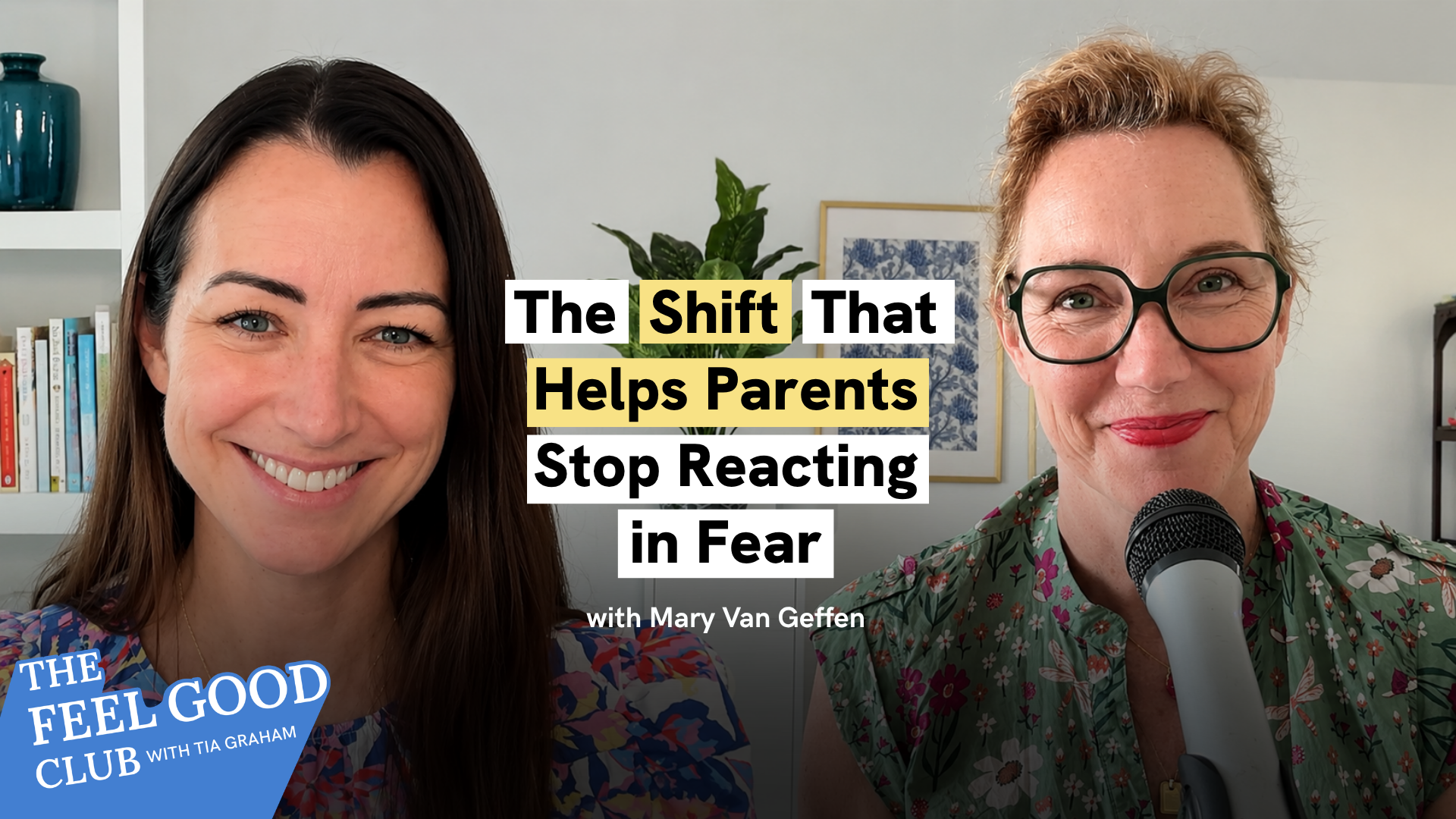



Healing Yourself Is the Secret to Parenting Your "Spicy One"
Here’s How.
Mary Van Geffen shared something so many parents of strong-willed, deeply feeling kids need to hear: your child's intensity often surfaces your own unhealed story. Mary went looking for a diagnosis to explain the constant power struggles with her daughter, but a play therapist gently redirected her, asking Mary to come in alone instead. What started as a search for what was "wrong" with her child became two years of uncovering what she had never processed about her own childhood, including a mother who called her difficult, intense, and "too much." The same words Mary had started using about her daughter.
That realization reframed everything. Mary explained that parenting isn't just about managing a child's behavior, it's about noticing what gets activated in you, and learning to stay steady even when your child isn't. She shared practical tools for this, like naming fears out loud instead of letting them stay vague and overwhelming, using grounding phrases or physical gestures to self-soothe in dysregulated moments, and most importantly, practicing repair instead of chasing perfection. Real healing, she said, isn't about becoming a flawless parent. It's about being willing to say "I don't like that I did that," and showing your child what growth actually looks like.
HERE ARE THE 3 KEY TAKEAWAYS FROM THIS EPISODE:
1️⃣ Your child's intensity can surface your own unresolved story.
2️⃣ Naming your fears out loud takes away some of their power.
3️⃣ Repair matters more than perfection in parenting.
THE OVERCOMING MOM GUILT TOOLKIT
Grab the FREE THE OVERCOMING MOM GUILT TOOLKIT
This free resource will help you finally make your home life happier and more balanced.
Get the Free THE OVERCOMING MOM GUILT TOOLKIT
“We can’t be a good parent when we’re operating out of fear.”
Guest Appearing in this Episode
About Mary Van Geffen
Mary Van Geffen is the author of Parenting a Spicy One, a compassionate guide for raising deeply feeling, strong-willed kids. She's the founder of Moms of Spicy Ones Academy, where she helps parents do the inner healing work required to raise intense children without diminishing who they are. Her approach blends personal experience with practical tools, helping parents build unconditional love for their children, and for themselves.
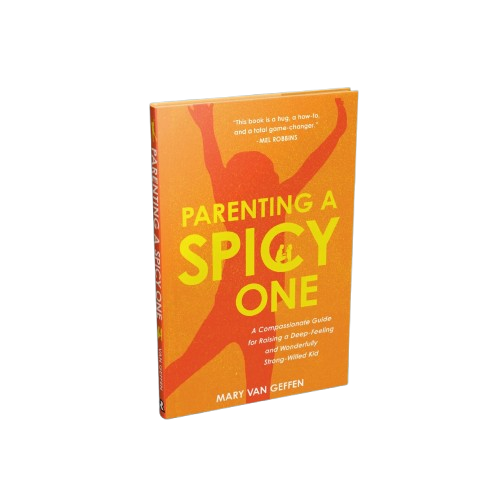
Parenting a Spicy One
Mary Van Geffen
Full Transcript
Tia Graham (00:01.006)
Hi Mary, welcome to the Feel Good Club show.
mary (00:04.89)
I'm so excited to be here. Let's all feel good, please.
Tia Graham (00:08.384)
Yes, yes. I'm gonna dive right in. You share and talk about that having a child like the ones that we have, or you might have, you know, people listening might have more than one, is an 18-year spiritual retreat you never signed up for. And you share that.
You were the one that needed to heal, that your child was was, you know, came for different reasons, and you know, you started on this healing journey, and I did the same. And so I would love to hear how that started and if you could just share that journey, because I think a lot of the women listening haven't even started yet.
mary (01:08.807)
Okay. I would love to share my story. And I also aware there's a lot of sound on your end, like a plane or something.
Tia Graham (01:15.586)
Yeah. No, you know what? And hold on, I realize it's the leaf
mary (01:21.145)
the beloved leaf blowers.
Tia Graham (01:26.573)
Is it
No, no. Yeah. No more. Okay.
Tia Graham (01:37.592)
Lower guy. Okay, we'll start again.
He just walked by. Okay. We'll start again and I'll note to my podcast editor where where it is. Okay. And I'll be able to make my question more succinct since it's the second time. Okay.
not to come back. He thinks that my baby's sleeping. yeah, you think the baby? I was like, yeah, the baby. okay.
mary (02:01.885)
Whatever he needs to think.
Tia Graham (02:09.528)
Hi Mary, welcome to the Feel Good Club show.
mary (02:14.126)
so glad to be here. And any way I can help moms feel good, I'm for it.
Tia Graham (02:19.134)
Absolutely. So one thing that you wrote that just struck out, you know, struck my heart, and I was like, yes, I love this, is you wrote that this is an 18-year spiritual retreat you never signed up for. And I couldn't agree more. This is such a spiritual journey. And you also write about healing yourself.
In this, in this journey of parenting a spicy one and having, you know, a neurodivergent child or children. And I've gone on a healing journey and continue to myself. Can you share with the listener how that started for you, how that catalyst began, and then share about your healing journey with the listener.
mary (03:12.507)
Sure. It it started when I was, I mean, it probably started back between my mother and I, right? But we don't have a lot of time. My mom didn't really like me that much. She loved me. And she would say, I love you, but I don't have to like you. And there was a lot of like things like, you and I are just like oil and water. We don't mix. And in actuality, we were both vinegar. We are both spicy ones. And
When I had a child, I started to say the same things about my strong-willed, independent, fierce, deep feeling, all all these words for just intensity and inflexibility and some like high sensitivity, right? She would notice anything. I started to talk about her in the same way. I would roll my eyes and be like, This kid, my gosh. And I kind of wanted a place to complain about her and
What I was really facing was sort of the my edge where I couldn't see that I was bringing a lot of my woundedness into this relationship. And so I went on a whole journey to get her diagnosed with something and thought if I can just get some letters next to her name, that will explain why there's so much combustion here and why everything's a power struggle. And every time we have to transition to something, the answer's no. Like
I just found myself saying, You have so many no's in you. and it wasn't parenting wasn't shaping up to be as I had imagined it to be, like my best little buddy. and so I needed help and it and I was getting more and more violent. So I was beginning to the things I had said I would never do, a little pop on the butt or
you know, gripping too hard, I was starting to find myself, because those give you immediate feedback, you know, the behavior does stop or it at least evolves into tears. And I was sort of like allowing my inner monster to begin to come front and center in the parenting. And so thankfully I found a therapist that was a play therapist, so that they would play with on a little dollhouse and all that. And I brought her in.
Tia Graham (05:31.918)
Yeah.
mary (05:33.148)
And I thought, let's get to the bottom of this. And that therapist saw her twice and then was like, Can you come without her? And I just assumed we were gonna sit down and I was gonna learn about maybe I have a sociopath as a child, or maybe like I'm ready to hear it and then we'll get a treatment plan going. And she was like, So there's nothing wrong with your daughter. She's gifted. and I think gifted is a type of neurodivergence and
since then there've been a lot of anxiety and other things that are her journey. But this therapist said, it's not why don't you come back next week without her? And then why don't you come back the next week? And why don't you come back the next week? And suddenly I was two years into starting to unpack my own stuff and the fact that I found her to be bossy and selfish and demanding because I thought those same things of myself. And I had not yet sort of unpacked
the story that gets told about me as a kid still does. When I when I go back to visit my family, they love to be like, remember what you said to your dad that he was in a dead end job and remember how you you threw the reins down when we tried to give you horseback riding? Like I was a spicy one. I was precocious. I was dysregulated. I had, you know, caviar dreams and a paper plate budget. But it's I'm parenting so differently than that. And what I found is
I couldn't do it on my own. Like I thought parenting was supposed to be common sense. And I think you're really separated from your own intuition and knowing when you have a lot of wounding with your own inner child and some things to work out with her. And so I have found and I see this in in the folks in my group, Moms of Spicy Ones Academy, that a lot of us
Tia Graham (07:07.373)
Mm-hmm.
mary (07:31.73)
Are ignoring our inner child while trying to be like the best mom for this flesh and blood child in front of us. Like, okay, I'm gonna make sure she sh I'm I'm having full presence when I am home. I'm gonna get her into this thing. And and like we're not checking in with the parts of us that haven't been seen yet. And so I think this spiritual journey I talk about is kind of twofold because it's it's it's about showing up for the little parts of you.
And letting parenting be a way of healing that part of you, like being for this kid what somebody couldn't be for you. But then there's there's also like stepping into what for me feels kind of almost religious of like, how do you love someone who's not willing to earn that love? How do you practice unconditional love? And that both goes for how you treat your child, but also how you treat yourself, because you're gonna mess up.
Tia Graham (08:06.914)
Mm-hmm.
mary (08:28.835)
so much. If you have a strong willed kid, you're just gonna do things that make it worse. And then you can easily go to this place of like, what's wrong with me? This sort of shame spiral. And other people are gonna make it even easier because they're gonna judge your parenting when you have a larger than life kid. And so finding out like how do we how can we be unconditional loving to ourselves? How can we bring compassion to something we thought was gonna be easier than it is?
Tia Graham (08:56.204)
Right. Thank you for sharing all of that. So you spent two years regularly meeting with this play therapist and really working on healing, healing your story, healing your inner child, and really understanding self, you know, and then like you said, growing unconditional self-love, focusing on compassion.
And after that after that two years, do you feel like your healing journey naturally continued? Was there anything else?
mary (09:34.094)
my gosh, yeah. It it continues to this day now that I have a young adult who's a senior in college who calls me and is is regularly disappointed in how I show up. Not not not overtly, but it's just to continue to be okay when your child is not, is I think a continuous spiritual discipline, like checking in and not that when we unconsciously react.
In relationships, we make a lot of poor choices. And I'm I'm fifty-five and I just learned last week in couples therapy, I wrote it down, that understanding someone is separate from agreeing with them. That in relationship we can show up with empathy and compassion and understanding. And it doesn't mean we agree with them. And this was more in relation to my husband than my daughter. but
I'm constantly learning. I think when we stop learning, that's a scary person to be in relationship with because I think we all are are constantly figuring out who we are in relationship with other people.
Tia Graham (10:43.49)
Right, right. Thank you. Thank you for sharing all of that. I have found that and and both my kids have gone to play therapy too, so I love that you did that. for me that probably could have helped as well, the inner child stuff. For me, the it was it was similar in that
mary (10:55.995)
I never got to play with the dollhouse by the way. We just went and did regular stuff.
Tia Graham (11:08.098)
There was there were situations where I couldn't stay calm. And it was more like, you know, I my voice would get louder, and I I just knew I was like, I am making things worse. Like this is, and my husband was always able to stay a lot calmer than I was when our daughter was really, really dysregulated and when she was screaming and she was, you know, it felt like my nervous system was on fire. And for me,
Doing somatic experiencing therapy and EMDR therapy. Those two, I didn't do it at the same time. I did it like separate, but it was like I just felt this, yeah. It was the start of this healing journey of yeah, going back and and you know, healing, healing body and reprocessing memories to separate what happened in the past to like what's happening right now with.
with a seven year old or an eight year old. So
mary (12:07.313)
And and there's so many times where we think, I'll I'll I'll take care of myself later. Like I I'll figure out what's going on for me. But right now and and we can't. We can't jump over we can't skip the kindness for ourselves and show up kind for other people. I I love to tell moms to ask themselves, Who's upset here? Because I think that's important data because we're so connected and enmeshed with our children and
Tia Graham (12:21.954)
Yeah.
mary (12:35.835)
If we have a spicy one, they are feeling a lot of emotions and they're loud emotions and they don't end quickly. And so like a hand on the heart and a hand on the belly, and asking yourself who's upset and noticing if maybe it's not you're upset to hold. Cause I think that's some of the spiritual growth too, is like, what's mine versus somebody else? Can I be okay when they're not? can I be aware of internally what's happening to me?
Tia Graham (13:00.12)
Yeah.
mary (13:06.083)
when somebody else is in distress. Do I I I had a a coaching call this morning with eight women and I said, How are you today? And everybody broke into a story about, well, this week, this happened, this happened. And I had to sort of bring them back to but right now, what's happening in your body, which is sort of that somatic therapy you talked about, and I am not a a therapist, but a lot of them were like, I don't know, because I am in fix it mode. I am putting out fires. I am just now setting down
I have no idea what's happening in my body. So what a beautiful first place in your curriculum of just checking in, like, what's it like to be in my body right now? And it sounds like so like we're both from California. So we might have some like Midwesterners and East Coasters who are rolling their eyes, but it it's
Tia Graham (13:38.288)
just yeah.
Tia Graham (13:51.725)
No, there's this science. Like the mind and body are 100% connected and you know yeah and and and taking that time to be no I couldn't I couldn't agree more. How have you over the past couple decades, how have you been able to not
Been not be swept away by fear, cause you wrote about this and I was like, I wanna talk about this. Not be swept away by fear.
Because fear is right, it's connected to the future. It's when we're catastrophesizing. It's there's a relationship with anxiety, and of course, there's connected to past. And when things, when there are big challenges, and our brain is trying to make sense of it all, can you share how you have how you have done that? And if you can, can you get like real, tangible and and practical?
mary (15:00.849)
Yeah.
I used to think I wasn't an anxious person. And I used to, I'm so perfect to help people with with anxiety because I I'm just so chill. but I I know that's not really the case now. Mine shows up in a a more a different way of needing very concrete answers to things and I I fear
was a part of my parenting, even if anxiety was not. And I think they're a little bit different. Like I had fear that my daughter was not gonna have friends when she got to middle school or elementary school. I had fear that she might not hold down a job. I I know parents who have a fear that th violent meltdowns are gonna continue and then somebody's gonna have problems with the law. And I think it's really
Tia Graham (15:35.361)
Mm.
mary (15:56.766)
For me, it was important to write down the exact fear and like pin it down because the fear keeps morphing and moving. And I think we have to like get really concrete with it and write out, I'm afraid that my child won't be a good friend. I'm afraid that my child will not be a functioning member of society, whatever your thing is. Like write it out because that amorphous, unspoken fear holds so much more power over you than like.
Here it is, it's on a page. Okay, that's what I'm afraid of. So that would be my the first step is to really name those fears to voice them to someone else. Because every time we tell our story to an empathetic listener, I mean, right now you're nodding and your eyes are soft. My story is changing because of your reaction to my story. Witnessing compassion from someone else, telling your fear to someone and them going, yeah, maybe. But they don't seem as riled up.
Tia Graham (16:27.384)
Mm.
mary (16:54.887)
There's has have you ever done EFT emotional freedom technique tapping? I love that the words to that of even though this even though I hold this fear that my kid is is not gonna be okay, or even though I think I'm a shit mom, excuse my French, I I still completely and unconditionally love and accept myself.
Tia Graham (16:59.202)
I have, yes.
mary (17:21.979)
And you say that over and over again in tapping. I completely and unconditionally love and accept myself. And that is so powerful to say, yes, I wrote down this fear. I actually am afraid of this. That's the first step. And I and somebody said to me once, Well, this thing that you're anxious about or concerned about, or this idea you want to move forward, do you think you're wanting to move forward out of fear or hope? And that really stuck with me. Like when you start to think like
Tia Graham (17:32.183)
Mm-hmm.
mary (17:49.288)
Well, which one do I want to operate out of? Do I want to a lot of us are hypervigilant because we ha we were in charge of too much as little people. So asking that question, like, and you can tell in your body the footprint of fear is so different than the footprint of of anticipatory hope and excitement. And just checking, like, wow, noticing which one is running the show because we can't be a good parent when we're operating out of fear. So when we name that fear,
It really helps to write the opposite, the hope or the kernel of what's okay already within that. So if the what's a fear that that you hear people struggling with, Tia?
Tia Graham (18:29.038)
similar to ones you said, right? Fear will they graduate high school, fear will they you know, have job, fear will they learn and grow social, you know, different really challenging so social skills, right? We talk a lot about just different legging skills.
Yeah, and I would say like an overarching one. And this is, you know, for me as a mom, like overriding everything is but I am you know it's not not always fear. I have fear and I'm actually full of hope also, especially over the in the last few years, way more full of hope. but
Like wishing and concern that your child is gonna be okay, right? Like, and you're saying, like, be okay when your child is not, of you know, visioning this person at 25 years old, and you know, I I'm an expert in the science of happiness, so I just think like in well-being. That's how my brain operates, and so.
mary (19:25.491)
Mm.
Tia Graham (19:45.036)
that they are well, right? And it doesn't mean, college degree, this, like not these boxes checked. It's that that they are that their well being is okay, right? That would be that's one that comes
mary (19:56.616)
Yeah, and what's interesting is it's it sometimes gets a little muddy. Is that a wish, a hope, or is it a fear? and for some of us it's all the above. But I I didn't I didn't feel and you can kind of tell when someone's talking, I didn't feel a lot of fear. I just felt like this is a value to me and like a guiding principle. And so that can be okay. more than okay. So, but if it was a fear, if you were like
Tia Graham (20:07.831)
Okay.
mary (20:24.945)
I just wanna make sure that that they're that they're gonna be okay. Then we might say, what does it look like to be okay? And kind of like delineate that and just get real specific and maybe it's like that they would become that they would have resources to know how to handle when they're feeling sad. I mean, some people are like they but they'd always be happy. W that's not realistic. Yeah.
Tia Graham (20:49.25)
That's not no, that's not realistic for anyone, let alone a spicy you know, anyone. No one is happy all the time.
mary (20:54.097)
Yes. Yeah. And so when we can write out our hopes that sort of take that fear and say the opposite, like when you said, Well, they graduate high school, maybe the hope is my hope is that I would continue to be a support for this child as they learn to struggle with the discomfort of learning. I mean you could say I hope they graduate high school. there's a lot of things that are a a little bit outside of our control.
Tia Graham (21:24.14)
Yes.
mary (21:24.795)
And so whenever we can name the hope as the thing of how we're gonna show up, regardless of how they show up, I think we get so much more agency and energy.
Tia Graham (21:29.57)
Right.
Tia Graham (21:35.565)
Yes, yes, yes, absolutely. I have this serenity prayer in two places in my home because it really is about the reminder of we have agency over some things, but there's so much that the universe. gosh, I don't even know if I have it memorized, but basically it's no the difference between what you have control over and what you don't, right? And and and the will.
mary (21:47.079)
Say the say the prayer again. It's it's so nice to hear when someone says it.
mary (21:58.236)
And yeah. The wisdom to know the difference and the courage to go change the things you can.
Tia Graham (22:03.138)
That you can. Right. And that's truly, yeah. I know with every every year that passes, that becomes more and more and more true. I think we just, like you said, always growing and we become wiser every single year too.
mary (22:19.985)
Yeah, and I think there's something with you when you have older kids. I know most of your listeners are likely like maybe twelve and under, but as they get to we we have to transition our parenting for each stage of our child's development. And in the teen years, letting them know like I have never had a teenager before. I've never parented a teenager. So I'm learning right alongside you. That humility, I think, takes the pressure off us. Sometimes we think we're supposed to always seem like we have it together. And that's not necessarily great leadership.
Tia Graham (22:49.72)
Yeah.
mary (22:49.745)
I think vulnerability can be, you know, and it's titrated. We're not telling them everything. there's still things some things about my teenage years I've not told my daughter yet, 'cause it's not her job to have to hold some things for me. But it ways that help them feel like, you you had a messy middle as well.
Tia Graham (23:07.158)
Right, right, yeah. you made me think also I you know, I I feel like I'm constantly practicing and modeling repair with them too, right? Of like, I don't know anything, of like, yeah, no, I messed up and I'm that made you feel this and going forward I'm gonna do this and not yeah, like you said, of not trying to act like you know everything or that you have it perfect because
mary (23:30.567)
We can
Tia Graham (23:37.206)
Nobody does.
mary (23:38.545)
And let's not like under stress how important and life changing it is to have a mother who repairs. I didn't have it growing up. I don't know if you did. it just wasn't a thing.
Tia Graham (23:50.275)
Yeah, no, not really. It would be more ma ma I needed way more repair from my dad than my mom growing up. No, I don't think I ever got it. Yeah.
mary (23:59.698)
Yeah. It it is profound and creates so much healthy attachment and covers all sins, so to speak, to be able to to humble yourself and say, I don't like that I did that and that that doesn't feel good and you don't deserve that. Now obviously you you said a good point about it that you have to have how it's gonna change. If you keep apologizing for the same thing and you don't have a plan and it's not changing, that's hard. What I learned and just just I think when the kids
Tia Graham (24:21.038)
Exactly.
Tia Graham (24:25.292)
Yeah.
mary (24:28.913)
were in high school was that a part of repair is pausing to ask, what was the impact on you? Like what's it like for you when I scream at you? What's it like for you when I give you the silent treatment? Like making some space for that kid to do a little bit of the processing of what it's like to be on the other side. We kind of want to just be like, I said I'm sorry, you're good. Okay. It's not a magic wand, like holding a little bit of that
Allowing them to process with you and not being defensive will also set the stage for when they're twenty nine and they're pissed at you about something. Like we wanna have that continuous loop of repair.
Tia Graham (25:12.62)
Yeah, that openness, yes. are there any other tools? And it can be ways of thinking, it could be what you do in terms of just how you act that have supported your mental health, your emotional well-being, you know, throughout throughout this journey.
that you think would be really valuable for the listener, things that things that you've done to help take care of you in addition to what you've shared.
mary (25:44.711)
Yes.
mary (25:50.74)
A few things I I can think of. I'll give you three. One is having a some kind of grounding lighthouse statement that you return to when things feel off kilter. And that might be something about the kind of parent you're becoming. It could be something like we're all doing this for the first time, something that kind of lowers the stakes.
a phrasing and I actually have a free PDF. If you go to my account and type calm, you'll get it that takes you through how to build this. And some would call it an affirmation or a mantra, whatever you want it to be. But doing a little bit of that work ahead of time and like putting that up in places, it sounds like yours is kind of a the serenity prayer. But having this
Tia Graham (26:37.128)
so many things all over the place. That's one. I got crystals. I got I got a lot of things supporting me and my wife.
mary (26:42.855)
Nice. Well, having because our brain obviously cannot think in moments of crisis and conflict. And so being able to have a phrase that you utter to yourself, like before I mentioned, I completely and unconditionally love and accept myself. That might be your phrase. Having something gentle and tender and compassionate that you go to, especially if no one spoke to you that way when you're growing up. That was such a way of healing.
and staying mentally well in the chaos of parenting. Another thing that has always helped me is the zip up. Do you ever do this?
Tia Graham (27:22.74)
I s I saw a video of you talking to another mom about the zip up. And I was like, that's cool. For me, what I have with what I did with my somatic therapist was a sphere around me. So there's like a little bit more space, but similar in that this visualization. But yeah, you could share the zip-up.
mary (27:27.955)
Okay.
mary (27:44.872)
Yeah. Well, it's to create that sphere around you. The idea is that you put your hand down in between your knees and you basically zip up your sphere, your golden sphere, and everything inside that. And so it might look like to somebody else like you are stretching as your hand goes up. everything inside is yours and everything outside of that sort of golden sphere is them. And we can be separate.
And we can still be in relationship and they can be like, can't believe this thing's happening and we can still be okay while they're not okay. And so that really helps me and if I forget and like I'm starting to feel kinda agitated because my kid or my client or my husband is agitated, I just I do that physical step of zipping up and I feel it's a reminder to myself, I am me and they are them and and that's healthy that we should have s our where my skin stops is
Tia Graham (28:20.802)
Yeah. Yeah.
mary (28:43.833)
Is just me.
Tia Graham (28:45.216)
Yeah, yeah. I love that, you know, and I think it's it's biological. There's there's so many reasons why we are feeling what our spouse and children are feeling, right? We have mirror neurons in our brains, emotions are contagious, like there's reasons for this, and having tools and practices to not
And and there were years I will like, and if I could go back in time, like there were so many years where I I took on all my girls' emotions and then some. I was like, you know, and even on the way to school this morning, my daughter was my other daughter's really upset about something. And I I kind of combined yours. I sort of have a grounding statement there up where it's like, I say, like, this is this is go something, this is going on. What do I say? Basically, like.
This is something happening within her. Right? Like she was sitting in the like, this isn't this isn't you. So I love that. Okay, what's the third?
mary (29:45.363)
Like your brain just needs a reminder, like
mary (29:53.316)
And and we need need that because what that person needs, that child needs when they are most dysregulated, is to look over and see that you are not and that you are calm. And that was a hard thing for me to learn more in my marriage, because when my husband is upset about something, he looks to me and he kinda wants me to be upset too. and so which is very similar to a spicy one. And so I had to find that that place of like, I hear that, like
Echoing back with with the intensity, like that would not be good, but me still being okay. The third thing is another kind of physical thing because when we're angry, we need some kind of way to offload that anger, to discharge it. It takes some physicality, some exhaling, whatever that is. And in the book, I call that your what's your your calm down recipe. You know, how do you consciously take a pause? How do you move?
Tia Graham (30:23.906)
Right.
mary (30:47.155)
How do you breathe? What do you think? And what do you focus on? But one thing that helps me is this fingertip thing. If you're if you're not watching, I'm taking my thumb and I'm touching my pointer finger, and then I'm moving my thumb to touch my middle finger, and then I'm touching my ring finger, and sometimes I'll touch my pinky, and then I start back over. You could do it just the first three, you could do all four, four fingers. And each time I'm saying something, which is God bless you.
That's for the pointer finger. The next one is peace with you. And the next one is I love you. Then I start over. God bless you. Peace with you. I love you. And I'm getting this nice firm sensory input as I squeeze the fingers together. And I'm also just bathing myself in these kind messages, which are true. Even when your child has just said, Why don't you F off, mom? I da da da da. You still want God or the universe, whatever your belief system is, to bless them. You still love them.
And you want peace for everyone. And so these are universal truths that you can hang on to. And it's sort of like stimming as well. If if you two are neurodivergent, there's something about making making stimulus within your body to block out the upsetting stimulus outside your body. And so I find that one really helpful. And I won't even notice somebody, somebody would be like, What are you doing with your hands? And I realize, they should be under the table because I'm trying to chill myself out.
Tia Graham (32:15.694)
I I love it, and the words are so beautiful. a practice that really helps me, and I think it's funny because my it's so helpful to me, and then my kids would be like, mom, stop it. But I pat my chest, like how you pat a baby when you're when your baby's crying, right? I even do it to my little dogs, like I just sort of pat and I'm patting my chest if someone's screaming, and it's like.
mary (32:32.699)
Mm.
Tia Graham (32:45.396)
But I don't have the words to go. Actually, there has been times when it's been really, really challenging. And I'll I'll be patting and I'll say, I am safe. I am safe. Like just because there has been, you know, dysregulation in our home. There was for several years. but it's funny because when I pat, my little one will be like, Stop doing that. It's annoying. Like the sound is bothering her, even though I'm calming myself. And I think, gosh, this is hilarious.
mary (32:57.084)
Mm-hmm.
mary (33:09.319)
Mm.
mary (33:13.415)
You can't win.
Tia Graham (33:14.666)
Yeah, I know. I'm like, all right, I gotta pat secretly. So where can people go to find more about you, to learn about your your book, parenting the spicy one? Where's the best place for people to go?
mary (33:30.023)
Well, I'm on the internet on Instagram ever every day. so you can look me up there with my name, Mary Van Geffen, like driving Van Geffen. and I, if you want to read Parenting a Spicy One, a compassionate guide for deep feeling, for raising a deep feeling and wonderfully strong willed kid, it's available wherever books are sold. And I recorded the audio book. So on Audible or however you buy your
recordings, sometimes it's nice to just listen. 'cause it's a lot to take in. A lot of people say they cry in the first chapter because I talk about that intense meltdown that goes on for hours when they're like four and you just everyone's judging you. and then I also have Moms of Spicy Ones alum Academy for kind of doing that deep work of how you want to parent this kid without stealing their shine. and
I had to learn it myself because my mom would say, I'm gonna knock you down a few pegs. And I don't think that's what we need to do with our kids. And she and I, by the way, still very much in touch, not estranged. but it's a testament to both of us that we're in relationship and that I am so close with my daughter now, who is gonna have her own challenges when she parents, because she's got a lot of judgment about out of control kids, and I'm always like, shall we roll the video?
Tia Graham (34:55.382)
My spicy one is like I would never have kids. Look how much work it is, is what she says. She's twelve. She might change her mind. She wants like forty horses instead. Well, Mary, thank you so much for coming on the show and I look forward to talking to you soon.
mary (35:03.759)
Yeah. nice.
mary (35:12.113)
Yeah, me too. Thank you, everybody.