
Episode #3 - Ashley Chang
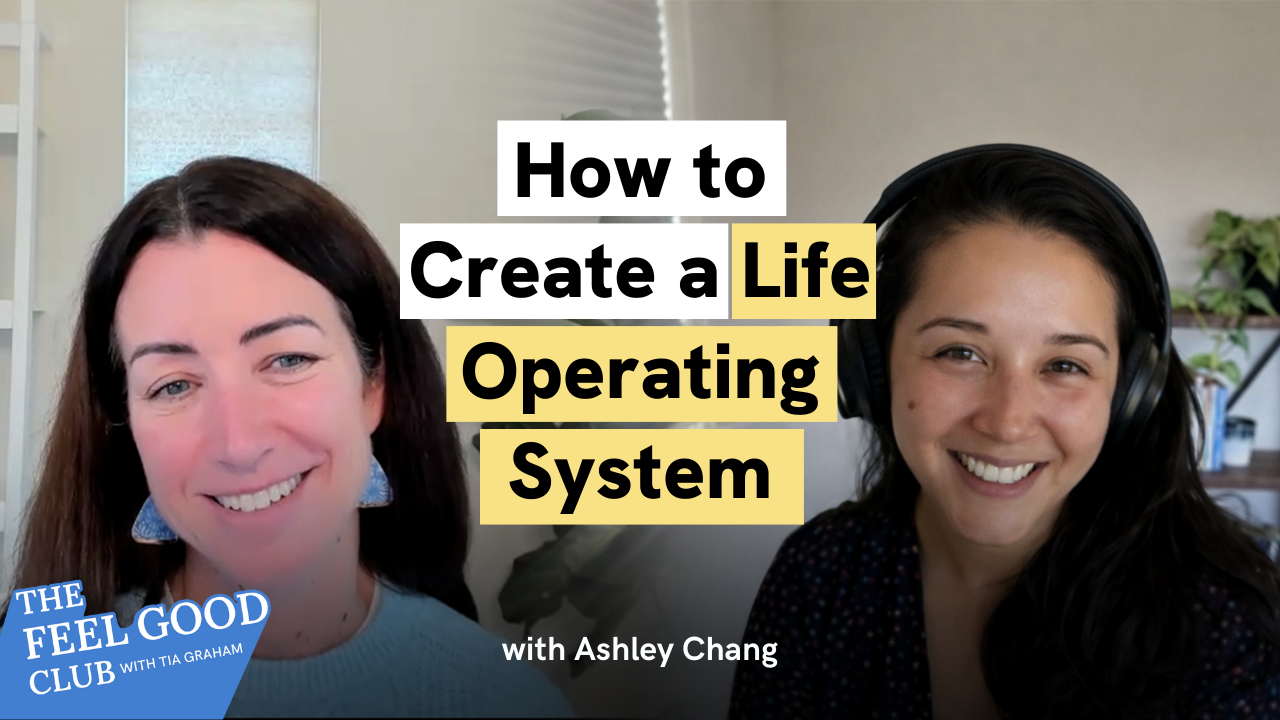
In the fast-paced world of motherhood and career, finding time for what truly matters can feel like an insurmountable challenge. This blog post distills insights from the latest episode of the Feel Good Club podcast, featuring Tia Graham and her guest, Ashley Chang, who share invaluable strategies for working moms to reclaim their time and enhance their well-being. Ashely is the CEO and Co-Founder of the company, Sundays.
Understanding the Time Dilemma
In a society where working parents often report having less than an hour a day to themselves, the struggle for balance is real. Tia and Ashley discuss how many working parents feel overwhelmed and time-poor, which can lead to stress and burnout. They emphasize the importance of quality time with family and self-care, pointing out that the science of well-being suggests that individuals need at least two hours a day for activities that genuinely fill them with joy.
Creating a Family Knowledge Base
One of the first steps Ashley recommends is to unload the mental load that many moms carry. This involves getting all the crucial information out of your head and into a shared system. For example, details like pediatrician appointments, grocery lists, and car insurance renewals should be documented where everyone can access them. Tools like Google Docs or Notion can serve as effective platforms for this purpose. Ashley suggests starting with a 30-minute session to begin this process, using your calendar as a reference to identify important tasks and responsibilities.
Leveraging Fair Play for Shared Responsibilities
Once you’ve established a foundational knowledge base, Tia and Ashley discuss the importance of dividing family responsibilities using a system called Fair Play. This innovative tool consists of a deck of cards that outline all tasks necessary for maintaining a household. By categorizing responsibilities and discussing them with your partner, families can create a more equitable division of labor. This not only lightens the load for working moms but also fosters a sense of teamwork and collaboration within the family.
Automating and Systematizing Tasks
After delineating responsibilities, Ashley encourages families to explore what tasks can be automated or systematized. For instance, meal planning can be streamlined by establishing a routine, and household supplies can be set up for automated delivery. This approach minimizes decision fatigue and allows parents to focus on activities that bring them joy, rather than getting bogged down by mundane tasks.
Key Takeaways
Reclaiming time as a working mom is about more than just managing a schedule; it's about creating systems that allow for a balanced and fulfilling life. By documenting essential information, using tools like Fair Play to share responsibilities, and automating repetitive tasks, moms can carve out the time they need for self-care and meaningful family interactions. Remember, it's not just about doing more but doing what really matters.
“You can divide the home and family responsibilities and decrease resentment.”
Guest Appearing in this Episode
Ashley Chang
Ashley is the CEO and co-founder of Sundays. She is on a mission to make it possible to have a meaningful career and family. She spent a decade in product management at fast-paced technology startups. She was the first employee at a developer tool called ReadMe, built the member experience at Collective Health, and helped to scale Carta's Venture Capital Business from $10 to $100M+.
Full Transcript
Speaker 1 (00:00.088)
Welcome to the Feel Good Club podcast. This is the place where ambitious working moms learn how to elevate their wellbeing, increase success in all areas, and create a positive, aligned life. Whether you're here to hear expert interviews or inspiring talks, this is your space to learn and grow. I'm Tia Graham, keynote and TED speaker, bestselling author,
and founder of the Feel Good Club community for high achieving moms. I am an expert in the science of happiness. This show is here to help you feel grounded, happier and connected to yourself and others. I know you are going to love it. Thank you for being here. Let's dive in.
Speaker 1 (00:53.184)
Ashley, welcome to the show.
Hi, Tia. Thanks for having me.
Of course, I'm so excited to talk with you and learn from you. So we'll dive right in. We're going to talk about reclaiming time for what matters most and listeners and myself, of course, as an ambitious working mom, time is poor. A lot of the days we don't feel very time affluent. And I know that you have interviewed over a thousand different parents about
is balance of work and family and integrating everything. So what systems can families set up to help them get time back?
It's such a great question Tia and we, I have spent the last two years interviewing parents and trying to understand how we can help parents have both a meaningful career and a family. And as you said, most parents, most working parents have less than an hour a day to themselves and many much less than an hour. And so we at Sundays are really focused on how do we create time for you to have quality time with your family.
Speaker 2 (02:08.812)
Do your best work at work and also hopefully have a little bit of time for yourself to. Yeah, for French.
or date night or whatever hobbies.
Yeah, because that's really critical for showing up as your best self in those other parts of your life too. And so Sunday is an executive assistant service, but the first thing that we really recommend is setting up these systems for your families. And when I think about systems, the very first thing that I recommend to all parents is to just get all of the information that lives in your head out of your head. So things like who's your pediatrician,
When does your car insurance renew? What are all the groceries that you order every week? Getting that information from your head, usually it's in mom's head, then out into a system where it's visible, it's shared, and everyone can reference is really powerful foundational system that helps your family start running more smoothly.
Okay, so first step is sitting down yourself or with your spouse and just thinking about all of the things that need to get done. All the things you think about all things you have to plan for and then the things that are repetitive like meal planning, etc. Okay. Okay, so that's the reason and are people doing this or putting it into like Excel? How do you recommend?
Speaker 2 (03:31.874)
You can use any tool that you're comfortable with. Sometimes people do it in a Google Doc. We usually use something called Notion because it's just like a super flexible system where you can have pages that link to each other. You can have databases. And we'll create basically a family knowledge base there where that's where you or your partner or any help that you have go to put this information and then to reference it when you it again.
Okay, so notion. Okay, great. And for someone that hasn't done this and maybe just like that first step is like, whoa, get everything out of my head. You can, it's not like you do this all in one sitting, right? You can kind of like...
Yeah, you can totally do it.
sort of do this gradual brain dump.
Totally, I think I usually recommend setting aside like 30 minutes and just getting started on it. And then I think once you have that foundation built, you can really easily just add things to it. And what we talk about when we think about getting started is it's really hard just like sitting at your desk to be like, what is all of the information that I have about my family? But I live by my calendar. And so I think referencing your calendar is a really easy way to do this. So if you look at your calendar for the next
Speaker 2 (04:47.086)
week, what are the things that you need to know about your family to make things happen? So maybe you have a pediatrician appointment and you want to put down your pediatrician's information and then that might remind you that you also have a dentist that your families go to. And so using your calendar to think about like what lives behind these things that I need to make happen and how can I store that information somewhere that I can visit again and that my partner could visit or anyone else who needs it.
can do. And I'll go back to what you said about most people said they have less than an hour and the science of well-being research shows that in order to feel happier the goal is you actually have two hours a day of time that fills you up and this is personalized for some people could be exercise for some people could be reading it could be
playing with your like actually being present with your children not like loading the dishwasher with your kids dishes right like obviously different activities. So this whole goal of having more time for things that bring you joy and make you feel feel happier. So okay then what is what's the next step after you get everything out?
Yeah. The next step that we recommend after you get everything out is to sit down with your partner if you're in a family that has two adults. And we love a system called Fair Play and Fair Play is a tool. They've basically cataloged everything that it takes to run a family and they do it in a deck of cards. There's a hundred cards that represent everything it takes to do to keep family life running smoothly. And there are things like
watching your pet, who's in charge of like doing the dishes every night, who's in charge of organizing and tidying. And so you basically use these cards as a tool to talk to your partner about what are the things that your family, that are keeping your family running? What does it mean for those things to be done well? And then who's going to have responsibility for them going forward? And that responsibility is not just like executing part, it's actually realizing something needs to be done.
Speaker 2 (07:00.866)
planning it and then also doing that executing at the end, but full ownership over that part of family life.
Let's repeat that. So it's not just the execution. It's the it's the mental load of it. It's planning remembering seeing what what steps need to be taken. So taking delegation of full ownership. Okay, and for some couples this might be easier conversation for some it may be more more. Yeah, more challenging if if it's really unequal or if
Both people are like, my God, I'm already doing way too much. So yeah, I would say give yourself a gracing of passion as you're doing it, but the goal of having it more fair, right? With the title of the Telefair Play. Okay, so you've now sort of divvied things up. Can you talk about then like sort of this life operating system or simple systems you put into place that really then
can make things easier and get time back.
Yeah, so I think that the FlarePlay cards act as a really good way to see like, what are all of the things that are happening in your family day to day? And then you can look at those cards and think about what are the things that I can automate? What are the things I can systematize to make them faster? And what are things that I could totally delegate to someone else? so I like to look at them really strategically like you would when you're running operations at work and think about like, how can I make
Speaker 2 (08:39.054)
my family the most as efficient as possible, at least for the things that we don't get joy from doing. And look at how we can create systems for those. And so that can look like running meal planning the same way for your family every week or making sure that you have like automated deliveries for your house supplies and things like that. So trying to create systems where you can that kind of run things on autopilot. So they both.
Don't take up your time, but also don't take up your mental space and create more of that invisible load that is really, really makes parenting and working really difficult.
Yeah, it's really about all the different decisions. Let's take a quick pause for something that can really support you. If you constantly question if you are good enough as a working mom and desperately want to feel happier, I'd love to invite you to a complimentary discovery call with me. In 45 minutes, we'll get clear on what is out of alignment.
what you want your days to feel like, and two to three simple changes you can make immediately to feel calmer and more confident. It's completely free and it's a chance for us to connect and see if the Feel Good Club for Working Moms or one-on-one coaching might support you. To grab a spot, go to tiagram.com forward slash discovery call.
That's tiagram.com forward slash discovery call and pick a time that works for you. Do you think and this is I know you've done a lot of research to do you think that working moms sometimes may have trouble letting things go?
Speaker 2 (10:39.022)
That is a great question Tia and I think that, yes, I think definitely does happen. And I think that it's okay to be in a place where you feel like it's hard to let things go. And I think for a lot of people that in the very beginning of kind of thinking about these things, it feels like a lot of your self-worth is like doing these things really well and it can be difficult to redefine what that means.
So yes is the short answer.
Yeah, yes. And you said self-worth. I was thinking identity and immediately also thought like, if your mom did all these things, right? And also what flashed in my mind was like, that's a good mom. Of you, right? Of whatever the heck that means. But it's been so integrated into the identity of a mom.
Yeah.
Speaker 1 (11:42.51)
Right? I think I would love to hear your thoughts on this is one of the challenges of being a working mom is you have these two really big roles and both of them have big identities. And then there's a lot of expectations and shoulds on both. And let's just take like such a micro example of like packing your kids lunches. Right? Like.
Yeah.
does if you don't do that, does that make you less of a mom for your kids? know, I'm just thinking of all that there's so many different things.
Yeah. And I think I disagree with you so much on that. And I think it, I think a lot of it does come down to identity. And for me personally, I just had this realization just a few weeks ago, but so my dad was an entrepreneur growing up and my mom stayed at home with us. And I just had this vision of being able to be a founder and a mom and being able to like fully do everything that I saw modeled for me. But
Yeah, I want to hear your thoughts.
Speaker 2 (12:50.574)
I'm just one person and those were like two full people being able to like
Ah, you were like, I'm be mom and dad and do both like.
Like, yeah. And I think that, so much of our like disappointment and, and how we feel day to day is tied into what are our expectations of ourselves. and you talked about packing kids lunches and whether that's the sign of a good mom or not a good mom. But I think that we get to make, we get to decide like that definition of what being a good parent is for ourselves. But it's really hard to break away from.
these external identities that we've been like socialized.
It could be your family norms, cultural norms, societal norms. And then we haven't even talked about all the content we see on social media. Stay-at-home mom's doing this or working mom's doing this, of all of it. And it's like, oh, I'm not doing that. So naturally, our brains compare ourselves to others. That's just how the brain works. And if you're not.
Speaker 2 (13:42.584)
Yeah.
Speaker 1 (14:01.046)
you know, if you're not careful, then you can like go down rumination of thinking of not, yeah, not enough, et cetera. And the family piece, I'm glad you talked about your parents. I know that for years and years, I compared myself a lot to how my sisters were doing things. They had kids earlier than me and they're in Canada, which is the way that Canada supports moms is way different than the United States. Like a year off paid maternity.
You know, where that was not afforded, you know, so all the different things. coming back to your family values, what matters to you, what works for you. And a lot of this is like letting go of how people in past generations did it because our moms weren't tech founders or weren't, you know, like, yeah, it's not the same now.
Yeah, mean, not enough of them, at least. hope that we have more in this generation than in the past. Yeah.
I think so. Well, the research shows that there's not a difference in kids happiness of working moms or not working moms. It's other things that matter. How you show up with your kids. Is there a lot of conflict in the home and all these other things? Because I know a lot of moms do think about mom guilt or am I spending enough time? And I certainly know that for decades. Go ahead.
I that's, oh sorry, go ahead. I just think the pure amount of time that people spend is so interesting where I was telling you, I have a five month old baby, so she's not the most interactive yet. Yeah, but I have like, my standards of like how much I want to spend time with him are I think pretty high given that I'm also like running a company. But I think that
Speaker 1 (15:48.0)
I'm a lot.
Speaker 2 (16:01.294)
A lot of parents feel this way where it's like every moment has to be really either present at work or present with your kids. And I just think that's really hard. We're setting in that way. We're setting on all the time.
Yes, yes and I will say one of the strategies and tools that has been transformational for me and I really wish I learned it before becoming a working mom because I've really integrated over last three years and my oldest one's 11 is the science of self-compassion because you can't be present and awesome all the time.
you're a human and there's challenges and so really, really learning to, you know, talk to myself like a friend, practice mindfulness and remember common humanity. Like we're all the same. We all mess up and, but I really love that you have that intention. And I, I did too. One of the reasons I left corporate was so that I could be with my girls more.
and design, know, design work and life. Not just around like you got to be in the office this time. So I think it's awesome that you're that you're thinking about that.
Yeah, totally. And I think so many moms are taking that step of leaving corporate because they're not getting that flexibility that they want. And it's, it's not that they don't want to work hard. think they're like, at what they do. It's just that there isn't the flexibility that they need for doing that work in a way that works for them.
Speaker 1 (17:41.036)
Yes, yes, absolutely. Yeah, like why do you have to work during these hours if yeah, it's about results. So I wanna know about the executive assistants and I wanna know how you help families. Tell me a little bit about Sundays.
Yeah. So Sundays is an executive assistant service for ambitious parents. And we have a team of EAs. They're almost all parents themselves, and they support the families we work with at home and at work. At home, we handle all the life admin that keeps your family running, like the appointments, holiday prep, school forms, back to school season right now. And then at work, for a lot of people who have left corporate roles and are running things on their own, we'll cross over and help them.
with work stuff too. So giving you time back to do the things that you do best and will help run kind of all of the behind the scenes stuff. So overall the goal is just to take that admin off your plate so you get time back to focus on the magic that you can create.
of what you could do with work. so we recently transferred, I don't know if that's the right word, but realigned our nanny to be part nanny, part house manager, which has been amazing. Like read the job description, took a lot. And I absolutely feel like, we could probably unload a lot more admin too.
I think my husband would agree also. And so is this where you could have someone doing a few hours a week or is it like, yeah, I guess come out like scope in terms of amount of administrative.
Speaker 2 (19:31.406)
Yeah, for most people, it's something like a few hours a week. And then we can go up to something that's more involved, or it's really someone managing your day to day. there, yeah, there's a whole, whole range of things that we help families with. So I think, first of all, like in the at the most basic case, we're kind of helping to execute on all of those tasks and be proactive about what's coming up this year. And so that looks like
I call it like life admin to like those Dennis appointments, getting your car out. Yeah. And then we do a lot around different seasons of life. So maybe the age that your kids are, they're like getting into a lot of extracurricular activities. And there's a lot of management around that. And doing all the sports signups and
Also information coming from their schools because my daughters go to different schools like just that alone. I told my husband I'm like my mom never had any emails coming from schools. Yeah, it was so easy to be a mom in the 80s. always easy and hard in a different way, but in terms of the just email volume.
Like.
Speaker 2 (20:41.194)
Yeah, totally. And then the last part is around like seasonality. So getting ready for the holiday is coming up now and trying to do that proactively is kind of what we do. And then we intentionally do it with like a very human first mindset. So you work with one person on our team and they get to know you, your daughters, your family and what your goals are. So they're like integrated into what you do. It's not just like you handing something off into the ether. They really become a part of.
or a right-hand person for you.
think what I'm going to ask for the holidays is for EA. This sounds fantastic. definitely have, you know, I have people supporting me with work, but and my husband and I divide a lot. We're very equitable and fair. But just the admin stuff alone, it's a lot. Just hearing you talk about it, I'm like, yeah, and we just kind of do it. So knowing you can offload it. And then if you'd use that time and spend it on working or self or kids or whatever, you're just going to show up better, of course.
So you are a newer mom, but this is a very intense phase when you have a young child also and you're growing this company too. What are one or two choices that you make that help you feel good as a working mom?
Yeah, I think the first thing that I'm working on is really having like those time boundaries. So having a time where I know like I'm going to get to go spend these hours at the end of the day with my baby and get to be present with him and realizing that like presence in that time is time I actually really get to connect with him. And that helped me realize like I don't necessarily need to be there all day for us to have that quality time.
Speaker 2 (22:31.68)
Right. So creating that time in the day that I know is going to happen and creating that schedule. And then the second thing that I've been really working on, and I'm curious to hear this from you, Tia, but I really value like journaling and writing out like, what's my experience been both at work and at home. And that's been really huge for me, especially as an entrepreneur over the past couple of years, because
I can look back and see like, my gosh, I actually solved some really hard problems and I got through that. And that gives me motivation to know that I can get through the next hard things too.
There's so much incredible research on the science of well-being and journaling. It is extremely supportive. And especially when you're going through challenging times or hard times, you said you got through some things. The research shows that when you're going through hard times, which I just feel like being a working parent, there's nonstop like.
Different challenges with work or home or marriage, et cetera. So you could do both, but basically either writing about what you're going through or talking about what you're going through. So I'm a huge proponent of like go to therapy, hire that coach, talk about what you're going through. But for a lot of people, it sounds like for you, writing can be as therapeutic and as helpful.
in reflection and in processing painful emotions. Like not just holding it in because that's when you know you are angry or you get sick or right because our body needs to process painful emotions. yeah journaling is really awesome. I journal on I do gratitude journaling on a regular basis. I'm a huge like talker so I talk way more than I
Speaker 1 (24:31.598)
Well, I shouldn't say. I write for work. But in terms of my emotions and challenges, I'm more of a talker with a coach or therapist. But it's really, really great. And journaling is incredible for men is also what it shows. It's even more profound for men, maybe because men talk a little less. yeah. So I know you have a few goodies for the listeners. us about those.
Yeah, so we would love to share with you the first thing is the time and energy audit. And so I don't think I talked about this yet, but it is a tool where you look at your day and look at your to-do list and helps you reevaluate what's really important to you, what's giving you energy and what's draining you energy. And my hope is that you can use it to find more time for things that give you energy and for joy or creativity, and then reduce some of those things that are draining your energy so that you don't have them on your to-do list anymore.
And then the second thing is a tool that helps you navigate this fair play process where we recommend using the cards for kind of dividing each of the home tasks that you have. But then we have a big spreadsheet where we also track kind of the accountability for those follow-up steps and systems that we have running and try to automate and make those things as efficient as possible so that everybody gets time back for family.
Amazing! So for everyone listening, you'll be able to get both of those with the links and if people want to follow you, learn more about you, where can they go?
Yeah. so I am really active on LinkedIn. you can look up Ashley Chang Sundays and you'll find me and then our website is with W I T H Sunday is with an S.com.
Speaker 1 (26:19.822)
with Sundays.com. Awesome. Well, Ashley, thank you for coming on the show. Thank you for all of your wisdom and tools. And I look forward to seeing you again soon. Thank you for joining me on the Feel Good Club Show. I hope today's episode left you feeling inspired and equipped to take on your day with confidence, self-love, and joy. If you enjoyed this episode, please subscribe.
leave a review and share it with your fellow ambitious working moms. Remember, you are not alone on this journey. We're all here to support each other in feeling good and living our best lives. Until next time, take care and be hopeful. And remember, prioritize your happiness.