
Happiness Lessons Every Working Mom Needs to Know
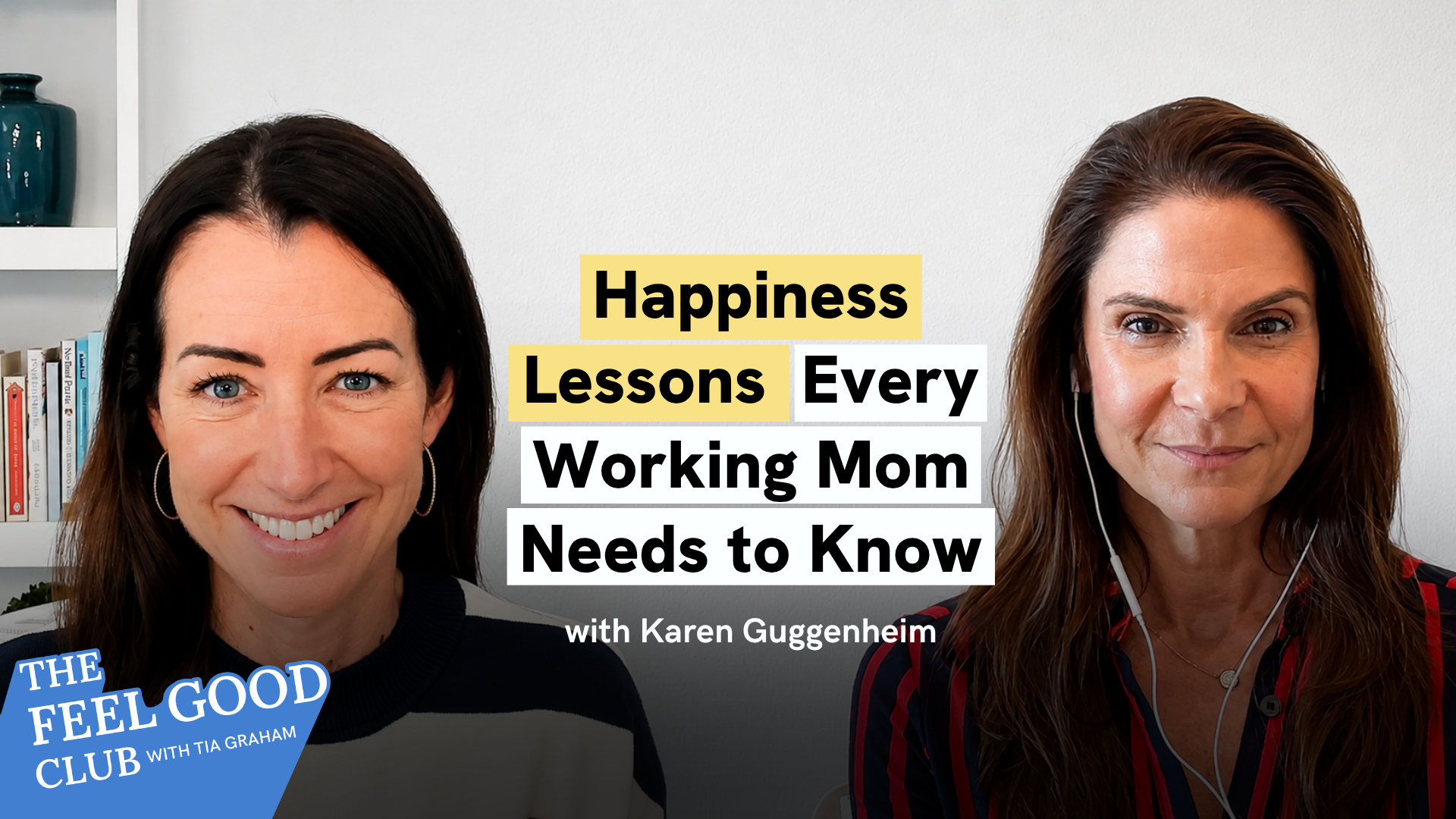



Purpose, energy, and presence can help you find steadiness in the middle of busy motherhood.
Here’s How.
In this episode, Karen Guggenheim brings the science of well-being into real working mom life. She reminds moms that purpose does not have to be grand or complicated; raising your children with love and care already carries deep meaning. When you notice that purpose, celebrate small wins, and stop measuring yourself only by what you didn’t finish, you create more space for joy and self-trust.
Karen also reframes well-being as energy management, not just time management. Instead of pushing through overwhelm, she encourages moms to build in recovery, slow down enough to be present, and protect moments of connection with their children. When you trade guilt for gratitude and make room for rest, joy, and purpose, your well-being supports not only you, but the family you care so deeply about.
HERE ARE THE 3 KEY TAKEAWAYS FROM THIS EPISODE:
1️⃣ Purpose can be simple.
2️⃣ Manage energy, not just time.
3️⃣ Presence creates joy.
THE OVERCOMING MOM GUILT TOOLKIT
Grab the FREE THE OVERCOMING MOM GUILT TOOLKIT
This free resource will help you finally make your home life happier and more balanced.
Get the Free THE OVERCOMING MOM GUILT TOOLKIT
“The foundation of future success is how well you feel as a child.”
Guest Appearing in this Episode
About Karen Guggenheim
Karen Guggenheim is the founder of WOHASU and creator of the World Happiness Summit, a global platform focused on the science and practice of happiness and well-being. She is also the author of Cultivating Happiness and speaks about resilience, purpose, post-traumatic growth, and building a life rooted in meaning. Her work helps individuals and communities use evidence-based well-being tools to create more happiness, connection, and positive impact.
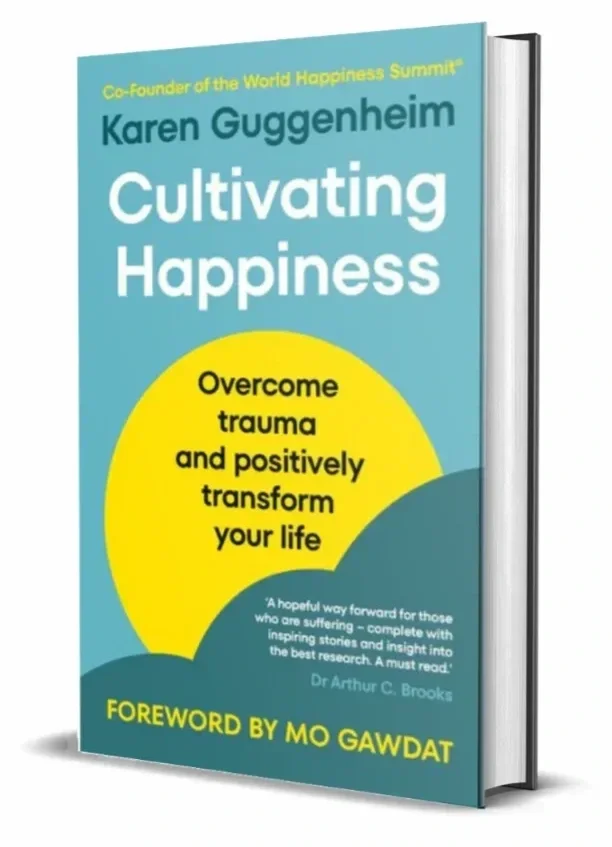
Cultivating Happiness
Karen Guggenheim
Full Transcript
Tia Graham (00:02.326)
Hi Karen, welcome to the Feel Good Club Show.
Karen Guggenheim (00:06.179)
Hi Tia, it's so nice to see you again. And every time we get together, it just brings joy to my heart.
Tia Graham (00:12.362)
me too. I can't wait to see you again in person. You have a lot of wisdom and experience and, of course, research into the science of well-being and what makes humans thrive. And my first question is: knowing that the listener is an overwhelmed, time-poor, probably stressed out, but awesome.
working mom, what would you say to her to pique her interest into the science of happiness, the science of well being?
Karen Guggenheim (00:53.411)
Well, before that I would just like to say that, you know, I've been there so I know that it's thrown around a lot.
That moms are heroes, but it's true. So it's so important to realize that. And one of the very first things that has to do with well-being is tied into purpose. And so already you may not know, but you're already practicing well-being if you have a sense of purpose. And so raising children to be whole, to feel loved, to feel appreciated, and they matter brings us moms.
such a sense of purpose. And so that is such a very important thing for happiness and well being, even though it doesn't always bring us positive emotions. Because as we know, you know, when you're running around after little kids or medium kids, it does require a lot of physical energy, emotional energy and mental energy. And so it's so important to to to look at your small gains, right? And to start to look at the things that you're doing
Right, as it were, or towards your own well-being, because it's so easy to get into self-criticism and to look at what we're not doing well, and then we go into something called rumination, which is not good, and it's our brain going into this cycle of what could I have done better? Why didn't I do it? What did I say? Why and you go into this vicious cycle that just robs even more of your energy and your joy. So
Tia Graham (02:13.101)
Yes.
Karen Guggenheim (02:32.831)
I think that in addition to connecting with the fact that you're living your purpose, and that
It's it's not only about time, I think that's important, it's about managing your energy. I think sometimes we forget that. And so what is really important is to see how you can in e you know, largely every day be able to engage in different things that manage your energy. So if you're doing something that is very taxing energy wise, then maybe you can do something that is more relaxing as it were, or less cognitive.
Tia Graham (02:47.917)
Yeah.
Karen Guggenheim (03:10.685)
In involved, you know, so maybe go for a walk or take the children, you know, to a park. If you've done homework and homework is is is an issue. You know, we've we've talked about this offline, but dyslexia is in my family, I'm dyslexic. So if you're in a traditional school, homework is very challenging. So I would counsel you to have recovery breaks during the day and to manage the energy, and then you begin to feel like you have.
Tia Graham (03:11.086)
I think restored it.
Karen Guggenheim (03:40.417)
Have more time because what happens and and I'm sure that it's happened to you, it's happened to all of us, that you're just so emotionally or cognitive overwhelmed that you may have time, but you just don't want to do anything with it. You kind of just want to sit and and like stare at a wall because it's been so overwhelming. So I think energy is also really important.
Tia Graham (04:03.734)
Yeah, no, I think those are really good. That it's such a it's such a great reminder that parenting is so purposeful, it's so full of meaning. And like you said, it doesn't give constant positive emotions, it doesn't always make you feel happy in the sense of like joy and right right. And to focus on the small wins, to focus on the positives.
Karen Guggenheim (04:05.838)
Mm-hmm.
Karen Guggenheim (04:20.227)
Doesn't
Karen Guggenheim (04:24.334)
Enjoy.
Tia Graham (04:33.634)
you know, I say to my husband a lot of times when we're both brushing our teeth right in our bathroom, we say, okay, what are three good things that happen today? Of just noticing a lot of times, it's like, like this whirlwind of work and kids. and yeah, energy management versus time management and making sure that you are that you are doing those things, even if you feel that you don't have the time, because you're gonna show up differently and you're just gonna.
Course, feel better, right? so before we hit record, we were talking about different parts of your life. what are some of the things that you wished you knew about well being and about just, I guess, being as an ambitious working mom that you know now that maybe you didn't know when your kids were young?
Karen Guggenheim (05:29.378)
Slow down. I think that would be a big one, slow down. We're always hurrying ourselves and our children. Hurry up, we're going to get late. Don't you know sorry.
We're always hurrying our children, right? And and and and ourselves. Hurry up, you're gonna be late. You're gonna how many times did I tell my children you're gonna be late and hurry up? And I think that that when you do something like that, you're also giving them like a cortisol jolt. You know, you get nervous and and even and especially when you're already in a situation where
It's stressful or potentially stressful and not imp it it really important to note, not all stress is bad, right? It's it's a chronic stress, but it's okay to be stressed if you need to study for a test or you have a deadline because that makes you focus on that. So that's healthy, that that that means you're gonna perform better, right? It's just when it becomes kind of a way of life that is a that is a problem. And and I think this idea of of hurrying
Tia Graham (06:28.078)
Mm.
Karen Guggenheim (06:37.656)
I'm just wondering where you know, ask yourself, where are you going? Like where
Tia Graham (06:42.926)
I mean what comes to mind for me is school, like getting to school on time. But that like hurry up, hurry too late.
Karen Guggenheim (06:47.382)
Yeah. And that's important, right? That's im exactly. That's important. But we also hurry them like we're going to the park. Hurry up. It's like we do. It's a habit. It's a habit that we have. Well, you're gonna go get ice cream. Hurry up. We'll just go get ice cream. You know? So everything's hurry up. I get it, you gotta you need to be to school on time. But we're always hurrying children. You know? It's like hurry up and go to sleep. Hurry up and go brush your teeth. Hurry up and
Tia Graham (06:56.642)
Right. Like the parking.
Tia Graham (07:12.767)
Yeah.
Like like come on, come on, come on.
Karen Guggenheim (07:16.778)
And I think language is so important. And I think we need to be more purposeful about the language. And then we get the argument of like, okay, but that's I'm too tired or my life is too stressful and now I have to watch my language. It's gonna become easier. That's the thing that the effort that you bring about being purposeful in certain things then makes the rest of it easier. Because the children are gonna be more relaxed. They feed off your energy. So if you are stressed, if you are
Tia Graham (07:41.166)
Right.
Yes, god, yes.
Karen Guggenheim (07:46.725)
Overwhelmed if you are that they're gonna not, especially if you have children that are neurologically more sensitive, they they almost they almost are in a currency of of energy, right? It's not what you say, it's how you're saying it, or the tone, and they can read you so quickly. You know, there's no hiding from your children, they know.
Tia Graham (07:56.268)
Yes.
Tia Graham (08:01.388)
Yes, yeah.
Tia Graham (08:06.872)
Yeah.
Yeah. no. Yeah, no. Without me even saying my older one who you know is autistic, she's like, Why are you stressed? And I haven't even said anything. I'm like, she knows how I feel at all times. Yeah.
Karen Guggenheim (08:17.378)
Yeah. Yeah? yeah. Or what's wrong? What's wrong? And you're like, no, nothing no something's wrong. They know you, they have your number. and I also I also wish that I wasn't so and this is part of the slowdown I think that I wish that I wasn't so worried about their future.
Tia Graham (08:25.612)
Yeah.
Karen Guggenheim (08:38.582)
You know, and and be more present about now, like what are we doing now? Are you are we enjoying the moment? Are we living the moment? Something that really impacted me, I I read recently and and it really is tapping into the work that I'm doing right now is in around presence and living and being living consciously, is that you know, later in life when we think that we don't remember things and we're losing our memory, many times it's
Tia Graham (08:42.894)
Well we're gonna
Tia Graham (08:54.509)
Yeah.
Karen Guggenheim (09:08.496)
Because when it happened, we weren't present. We were physically present, but we weren't mentally present because we're doing another thing, thinking about something else in our head. And if we do that, it's like it didn't happen, or at least it didn't happen to us, because we weren't present to the moment.
Tia Graham (09:12.536)
Mm-hmm.
Tia Graham (09:21.699)
Mentioned
Tia Graham (09:29.57)
my gosh, this really hit home. This really, really hits that you are
Okay. I feel like we could talk an hour about this. Okay, so it's natural for a mom and you know, a working mom to care a lot about their kids' future, to be invested in your kids' future, right? And so I want to say how, like.
Karen Guggenheim (09:53.198)
Of course.
Karen Guggenheim (09:59.234)
But not at the cost of today, that's the thing. Not at the cost of the present moment, and that's the problem. Because then we go into remember Sean Acres' work on moving the gold post on happiness, and he's a researcher on happiness, so that you know we're moving. When this happens, when that happens, then you'll be happy. But then you're just moving the gold post. And the same thing when we're yes, of course, we want them to thrive in the future and do these things, but if we are so hyper.
Tia Graham (10:11.436)
Yeah, yeah.
Karen Guggenheim (10:29.218)
Or focus on that, then we are telling them your well-being and your happiness is wholly external or largely external. When it's really the foundation of your future success, research shows is how how well you feel, how happy you feel as a child.
Tia Graham (10:42.893)
Got it. So it
Karen Guggenheim (10:58.474)
Even if you're looking for their success later, you know, even if you're looking at employment and you're looking at raises, and you're looking at there's a whole bunch of research on that. but we we have a hard time believing that because we think of it as soft.
Right? And so it's not tangible. It's like show me the A or show me the, you know, later show what you how much are you earning? And that position that you got is gonna get you to what? Is it gonna make you be partner? Is it gonna get you the house? Right? And so w we're as parents, we always want them to be okay and and secure, but we also have exactly, but we we give I think we give too much weight of that. It is absolutely
Tia Graham (11:34.285)
Right.
Tia Graham (11:41.826)
Meaning like financially and yeah.
Karen Guggenheim (11:49.568)
Absolutely important, let me clarify, absolutely important. And at the same time, the other one is is just as important because it's the foundation for the other. You know?
Tia Graham (11:53.646)
But we get too much weight.
Tia Graham (12:03.682)
Right. Well, I thought you were gonna say, and I'm so glad you said what you said, I thought you were gonna say that well being is the foundation of their success when they're an adult, right? Because then there's all the research on you're going to put yes. And but but and but you were also saying the foundation of future success is their well being as a child. So it's like as as a child.
Karen Guggenheim (12:19.039)
It is. That's that's that's what that's what I s yes.
Karen Guggenheim (12:28.409)
yes, as a child, yes. That's what R Richard Lyard's work looks at that.
Tia Graham (12:33.238)
Right, right. I love whenever he speaks. Yes, yes. okay, I want to switch gears.
How can someone, how can a working mom who constantly feels guilt that she works, even though she loves working, because the women listening, you know, are are happy working moms. They want to work, but there's this constant questioning, insecurity around, you know, gosh, would my be, would my kid be better if I was a stay-at-home mom?
If I was around a little more, and I know the mom listening is a great mom, loves her kids, and spends time. It's not like this is an absent, you know, absent mom. But can we talk about the feeling and the experience of working mom guilt? I would love to hear if you experienced it and what with with all of your wisdom and knowledge now, what advice you would have.
Karen Guggenheim (13:37.996)
I did experience it for a for a short time, a long time ago. I was a journalist and I worked very, very long hours and I loved it, but I knew that I didn't want to pursue that because my children were young and that but that was the part where you you know leaving before they wake up and coming back after they're put to bed and I didn't want that experience as motherhood for me. I didn't want that. So I I I did I didn't do that. and I've also felt
Tia Graham (14:02.979)
Yeah.
Karen Guggenheim (14:08.019)
particularly when with travel you know that in particular travel is a big big work travel is a big big issue with guilt and and fun travel also is a big issue with guilt now I want to highlight this very importantly especially for those as you described who like to work and enjoy their work and find satisfaction in their work
Tia Graham (14:14.019)
Works.
Tia Graham (14:18.115)
Yes.
Tia Graham (14:37.026)
Yes.
Karen Guggenheim (14:37.203)
It is very important to continue doing that because, like we were starting our conversation, that is going to add energy to you. So that when you're with the children, then that is go you're going to come from a space, even though yes, you are tired from a long day, and then it's challenging, of course, to be a mom, but you will have some kind of reserve with your also your brother.
purpose and your other sense of meaning that gives you to your life and and the coherence and maybe the added financial safety that you have by by having the the you know the working in the way that you do. So all these things are contributing to your personal and your family's well-being. And I will ask you this
Think about your child as an adult, and do you want your child to feel guilt about working and have and being a parent? So you don't want that for your children. And so remember that what you model is what the children see.
Tia Graham (15:41.77)
No, no.
Karen Guggenheim (15:49.983)
It's not just, you know, unfortunately, it's not just like, hey, I want you to remember this and I want you to think of our life this way. They are seeing you, okay, in full colors without you saying one word, because guess what? There's nonverbal communication. You're still communicating. And so that you are the role model. So if you cannot express or feel or think that finding joy either
In your leisure time or in your work is not something that is valuable, they are going to integrate that into who they become as adults. So this guilt is going to be a generational thing, and you don't want that to be your legacy to your children. So you can even think about it that way if that helps.
Tia Graham (16:31.523)
Right.
Tia Graham (16:40.098)
I love
I love that you said that. So I struggled with immense working mom guilt for almost a decade. And I I actually realized that and and I did a lot of different therapies and you know there's a lot of a lot that I discovered about myself, learned about myself. and I realized that it act that a lot of it wasn't guilt.
It actually was this underlying feeling of inadequacy, like just feeling not good enough. And I called it guilt, but it actually wasn't guilt. And I really haven't felt it for the last couple of years. And I did a lot of different things. And I I want to help other other working moms do the same. But you created such a beautiful list, and I just want to say it again that working gives you energy that
It it gives you purpose and meaning and coherence, you said you are modeling it from your for your kids, and you want your kids to work, and you don't want your children to feel guilty for working, right? The the joy and the purpose, and of course, there's the financial benefit. There's so many things that yeah, that that it really is changing your your mindset and just
How you think about it and then of course how you feel about it. Yes. Yes.
Karen Guggenheim (18:05.996)
How you think about it? Metacognition. Metacognition. So how you think about it? So one thing you said that I want that I said that you know for the ch that I want the children to work. No, that the if the child well, if you need to work, you have to work, right? Because you have to to to to that's a that's a given. But if especially if you choose to work.
Okay, and you tr and on top of that you're working in something you actually enjoy. That's a gift that should be celebrated and there should be gratitude around that.
Tia Graham (18:36.547)
Yeah.
Karen Guggenheim (18:41.504)
You know, I find I found work that I enjoy. Not that I is a replacement of my time with you, but I am also a person, and this makes me a better me, which is a better mom. And that is ultimately my purpose. Ultimately, my purpose is to be a better mother to you. And these are the things that I need to do to get me there. And you have to believe it too. That's the thing, right? You need to give yourself
Tia Graham (19:00.269)
Right.
Tia Graham (19:09.164)
Yeah. Yeah. You have to believe.
Karen Guggenheim (19:11.478)
That permission to enjoy, right? Enjoy it's okay. It's okay if you don't come home exhausted and it hasn't been like horrible. It's okay to walk in the house and be like, you know what? I had a great day. This was a fun, I had so much fun today, and I'm so happy to see you. You know, and I missed you, and I can't wait to do these things with you. But
Tia Graham (19:27.148)
Yeah, yes.
Tia Graham (19:33.014)
Right. I for sure know that I am a happier mom and a happier human working. And I also feel and am so grateful that I f that I love my work. I mean, not every single thing, but you know mostly. Yes. And and then of course I want if if my if my children want to work, you know, modeling that,
Karen Guggenheim (19:50.572)
Of course, of course, of course.
Tia Graham (20:01.592)
But yes, it is, like you said, the metacognition, thinking about how you're thinking. okay, let's talk about some more, I think, positive emotions. before having kids, there's from my experience, there's a lot more fun. I mean, you have fun with your kids, but it's different. Like with friends, or like again, the work, the work things, or
Karen Guggenheim (20:25.726)
It's different. Yeah.
Tia Graham (20:30.702)
I don't know, dating adventures and all this, all this, you know, this stuff, whether it's excitement, joy, like super optimistic, like, you know, and there is a parenting is so purposeful and it's a huge responsibility, right? Like there's even though you're saying to not, I'm gonna, of course, remember the two things you said, but there is some like responsibility weight that comes with it. what are your thoughts on?
Karen Guggenheim (20:47.36)
Yes.
Tia Graham (21:01.992)
Choosing to feel more joy, choosing to do things that light you up. And you know, a lot of this is talked at the World Happiness Summit about the agency that you do have to, I guess what asking is kind of bring some of that like lightness back, even though your when you look at your calendar, it gives you like heart palpitations because of all the activities and the school things and the, you know.
Karen Guggenheim (21:31.222)
Mm-hmm.
Tia Graham (21:31.61)
yeah, w what are your thoughts on on that sort of joy and fun and lightness and like not thinking, I'm gonna get that back when my kids go to college?
Karen Guggenheim (21:43.594)
Right. I think that would be a big mistake. You know, life doesn't owe you anything and that may or may not happen. And so I used you know, as I'm a widow and my husband died young and did that didn't that retirement that we were gonna have together and the children we didn't have that life. Having said that, you know, I I'd like to t take some things apart here. So for example, joy, a positive this positive emotion is not something that I don't think we can choose to have.
Tia Graham (21:52.621)
Yeah.
Karen Guggenheim (22:13.517)
Joy, but I but we can choose to be grateful. We can choose to see what things went well. And that doesn't mean rose-colored glasses. There's still life happens, and that's a totality of life. But we can choose to frame things in a different way and to and to really be mindful of the stories that we tell ourselves about ourselves and about us in our lives. And so, for example, the victim,
You talked about guilt, but the victim mentality is very bad. Happiness killer. Like happiness killer is victimhood. And so because it doesn't empower you, there's no agency. And so I'm not talking about people who are abused, okay? That's not what I'm talking about. I'm talking about going into a situation where we just go into, you know,
over complaining and focusing on what we didn't get and what didn't happen and how, you know, reciting five times everything that went wrong. And is is a matter of fact of looking at the totality of life because perhaps there were 20 things that went right, but because of our negativity bias, we look at the five and we get stuck on the five. And so you have to broaden that len that lens to look at the totality of your experience. And that's where journaling is really helpful.
Tia Graham (23:13.016)
Yeah.
Karen Guggenheim (23:40.062)
So the it the act of actually putting it down on paper, especially by hand, it reinforces memory, but also it it broadens your your mindset to understand that these other things occurred. And sometimes that's a part where you have a choice and you can be purposeful and put effort into looking at that and and what else happened. Because we stop at this happens, period, but it's like but a whole bunch of other
stuff happened too. And so that's where we need to spend more time on that.
Because then when we do that, then you are creating an environment for you to feel more joy. So, you know, you can't make yourself feel joy. Like, I just want to feel joy now. No. But you can call a friend, you can do, you can go for a walk, you can listen to something funny, whatever it is that it is for you, music, dance, what the important thing is that you
Tia Graham (24:36.898)
Mm.
Tia Graham (24:40.258)
Mm-hmm. music stands.
Karen Guggenheim (24:46.583)
Pick what it is that that act that activates that for you, right? And then you start to notice that. And when you notice it, then you start to put that in your daily calendar. And we're talking about literally minutes. That's another thing that we are not good at, is is predicting the things that make us happy. So that's why we don't do them as often.
If you notice if you you
Tia Graham (25:17.112)
We undervalue the happiness that we bring us. We don't participate well.
Karen Guggenheim (25:19.453)
We don't know. We don't predict it well. So for example, doesn't it happen that you maybe call a friend or you you you went for a walk or you went to the gym and you're like, my God, that was amazing. I feel awesome. I I'm gonna do that every single day. I'm gonna go twice a day, you know, and you you're like, into this thing, and then you forget because we we're not good predictors. So that's why we have to create habits. You know, you don't you you you don't ask yourself,
Is it a good time for me to brush my teeth? Do I r how do I really feel about this? Is it really gonna be a positive? Is it a reason, you know, you just go and brush your teeth because you want to have healthy gums, you want to have good breath and healthy teeth. So when you're talking about your well-being and having that energy and that nourishment for yourself, it's really important to identify. I will tell people, just go identify two things that make you feel
re regenerated that make you feel like a s either a sense of calm or fulfillment or or laughter or joy or accomplishment or curiosity, those things will then create a biological release of endorphins in your brain. And so then you let biology do it.
Tia Graham (26:19.512)
Mm-hmm.
Tia Graham (26:30.478)
Right, right.
Tia Graham (26:39.8)
Mm-hmm, mm-hmm.
Karen Guggenheim (26:45.353)
You know, you don't have to do anything except create the habit, do it, and then they're trickling effects from it. And the the the the opposite is true with negative emotions and negative things and negative habits that that harmful that are harmful to us. We secrete cortisol and then inflammation and all those other things that that happen.
Tia Graham (27:07.02)
Right, right, right, right. doing the things, the habits you talked about, and then the noticing, the savoring, again connecting to presence in the moment, and then also, you know, also gratitude. I could ask you 40 more questions, but I have two more. One is
We know that the number one predictor of happiness and well-being is human connection, right? With with people you care about and who care about you, whether this is friends, family, neighbors, children, coworkers, you know, all the people. and so what advice do you have for this busy, busy working mom whose life is pretty much filled with sleep, kids, and work?
Karen Guggenheim (27:40.949)
Yes.
Tia Graham (28:03.567)
to infuse a little more human connection.
Karen Guggenheim (28:07.732)
So be careful about the phone. You know, be careful about the phone. Be careful with the phone because you might get in there to look at something real fast and you're in there an hour later and you you didn't even you didn't even find the thing you were looking for. So be careful
Tia Graham (28:11.724)
Hmm. Yes. I was thinking that earlier about the when you have a present.
Tia Graham (28:23.64)
Thirty minutes. Yeah.
Tia Graham (28:27.766)
Yeah, you're like, Wait, why did I pick up my phone?
Karen Guggenheim (28:30.076)
Well, the algorithms are working against us, right? So y so and and they're not ner it's like cotton candy. You're you're not getting healthy connection there. You know? So
Tia Graham (28:32.408)
Yeah. Yeah.
Karen Guggenheim (28:41.542)
There's also super interesting work around the value and the impact on our biology when we hear a loved one's voice. So there's studies that that that they they had girls who who just went through a stressful event and they talked to their mom on the phone. Okay, and those that talked to their mom afterwards the researchers found out that their cortisone.
Tia Graham (29:02.062)
Mm.
Mm-hmm.
Karen Guggenheim (29:11.436)
level, the stress hormone decreased, and the oxytocin increased the feel-good hormone. Now for the ones that had no contact or texted, there was no change in their biology. So call.
Tia Graham (29:25.496)
Hmm. That's a very important. Yeah, I FaceTime with my mom yesterday and we were cracking up over something. So yes, yes, the voice, voice, voice and video over text in person. Yeah.
Karen Guggenheim (29:35.337)
voice, voice and visual as well, but but that's important so call a call somebody. Call somebody. And you know if you're overwhelmed
Or feeling a little bit sad, call somebody and ask them how they are and if if they need any you know, how can I help you? Or how are you feeling? Because that then you also tie we're hard for hardwired to feel good when we do good for other people. And so that's another way that you get that biology working for you. turn on a song, something that I did after my husband died the whole first year was that when I went in, took a shower, I
Tia Graham (30:01.388)
Yes.
Karen Guggenheim (30:15.37)
put a song that that I liked and that g elevated my mood. And I didn't wait to want to hear the song. That's also really important. We're don't wait to be happy to be happy. Like you have to create conditions that will hedge towards how you want to feel.
And that's where we have the choice, that's where we have the responsibility. It's not that it will always happen, but you gotta put yourself in that in that field, right? And so I would put the music on and then I would listen to it and I'm like, that's kind of nice. But it wasn't like, hey, let's go and have disco in it at in the shower because my emotions were not were not joyous.
Tia Graham (30:55.854)
Of course, of course, of course. Watch your phone, call and talk to loved ones on the phone or video or in person, of course, and and ask how people are doing and create happy conditions. And my last
Karen Guggenheim (31:11.764)
Tia, these things, I just want to say these things sound in so perhaps insignificant or like how could they possibly work? But they actually work. They actually no, I know you know, I know you know, but I'm saying to people that haven't tried it, please just take a week or two. Just please try, because it's small changes over time that create these results. So they're so simple, but they actually work.
Tia Graham (31:20.8)
No, no. I don't they I don't think they sound
Tia Graham (31:26.488)
Yeah.
Tia Graham (31:39.776)
Mm-hmm. Yes, yes. Okay, in addition to everything you've shared, what are two things, two choices that you make that help you feel good as a working mom?
Karen Guggenheim (31:54.805)
Two choices that I make, well, one is to my children are older, so but I connect connect with my children. That definitely is something that's very important to me. to see how they're doing, to just have fun with them. That's another thing. See if you can have fun with your kids. So we all like sports. So we see sports together and then we talk about sports.
Tia Graham (32:00.27)
Mm-hmm.
Karen Guggenheim (32:17.574)
And so it's so nice because it's so like trivial at the same time, you know, and you get into these conversations and it's almost like like a respite of whatever stressors are happening in your lives. If you can just talk, like ask your kid, your little kid, what's your favorite color?
You know, what's your favorite? why how come? And something like that. Or or or what's your favorite ice cream? Or I don't know. S just things that that will bring you into a point of of fun with your kid. And and then you get to know them. These stories carry on later, you know, and they'll remember that. They'll remember that conversation with you. And the other thing is to give yourself some grace. You know, you're not gonna get it perfect ever. Ever. So stop trying.
Tia Graham (33:01.389)
Yes.
Karen Guggenheim (33:09.964)
ever. Stop trying.
Tia Graham (33:11.032)
We'll not get it perfect ever ever. Look, Aaron.
Karen Guggenheim (33:17.71)
The other thing is, and since mine are older, I'll tell you that, they never say, you you I mean, and we're talking about parents who are with their children, not parents who abandoned their children, like you we've we've set that you know, that that prefix, but the my children have never told me you weren't with me. They're thirty and twenty nine, thirty, thirty-two and twenty-nine. So never.
Tia Graham (33:39.842)
Like they never were like, that work trip you took.
Karen Guggenheim (33:43.388)
N never, ever that work trip or you didn't we weren't there that time for dinner or or or anything like that. So yes.
Tia Graham (33:52.558)
Give yourself grace and don't worry about everything.
Karen Guggenheim (33:58.11)
Yeah, and some things are just gonna you're just some things are just gonna be if you choose to call it a failure, but something is just life. There wasn't enough time for that, but there was enough time for the other stuff. And so then you also give the gift to your child.
Tia Graham (34:05.708)
Yeah.
Tia Graham (34:10.37)
Right.
Karen Guggenheim (34:13.992)
To develop that mindset. First of all, you know, you're not gonna get everything in life. Okay? But that doesn't mean that something's wrong. It just means that's the way life works. And so I also think it's really important to raise resilient children. And if we give the idea to a child that everything turns out great and everything is supposed to be perfect, you're not building resilient children.
Tia Graham (34:16.536)
Mm-hmm.
Tia Graham (34:27.202)
Right. Right.
Tia Graham (34:41.779)
They're gonna be very they're g they're gonna have a shock. Yeah. Yeah. They're not gonna be able to over.
Karen Guggenheim (34:44.168)
They're gonna exactly. And they're not gonna be able to overcome. So, you know, you're not gonna get everything right. We're gonna get most of the things pretty good and some things are gonna be fantastic. And let's go on this journey together.
Tia Graham (34:56.3)
Yeah, yeah. Karen, thank you so much. If people want to learn more about you, learn more about Wahasu and the World Happiness Summit and your books and TED Talks and everything, where is the best place for them to find you or follow you?
Karen Guggenheim (35:16.286)
Well Karen Guggenheim dot com. So it's very, very easy. And if they want to look at Instagram for Wahasu at Wahasu to get more information about our community and our events. And I'm so happy to talk to your community. Tia, thank you so much for having me. This is wonderful and you're doing great, great work.
Tia Graham (35:33.902)
Yeah.
Tia Graham (35:38.616)
Thank you. See you again soon.
Karen Guggenheim (35:41.246)
Thank you.