
Episode #13 - Megan Sumrell
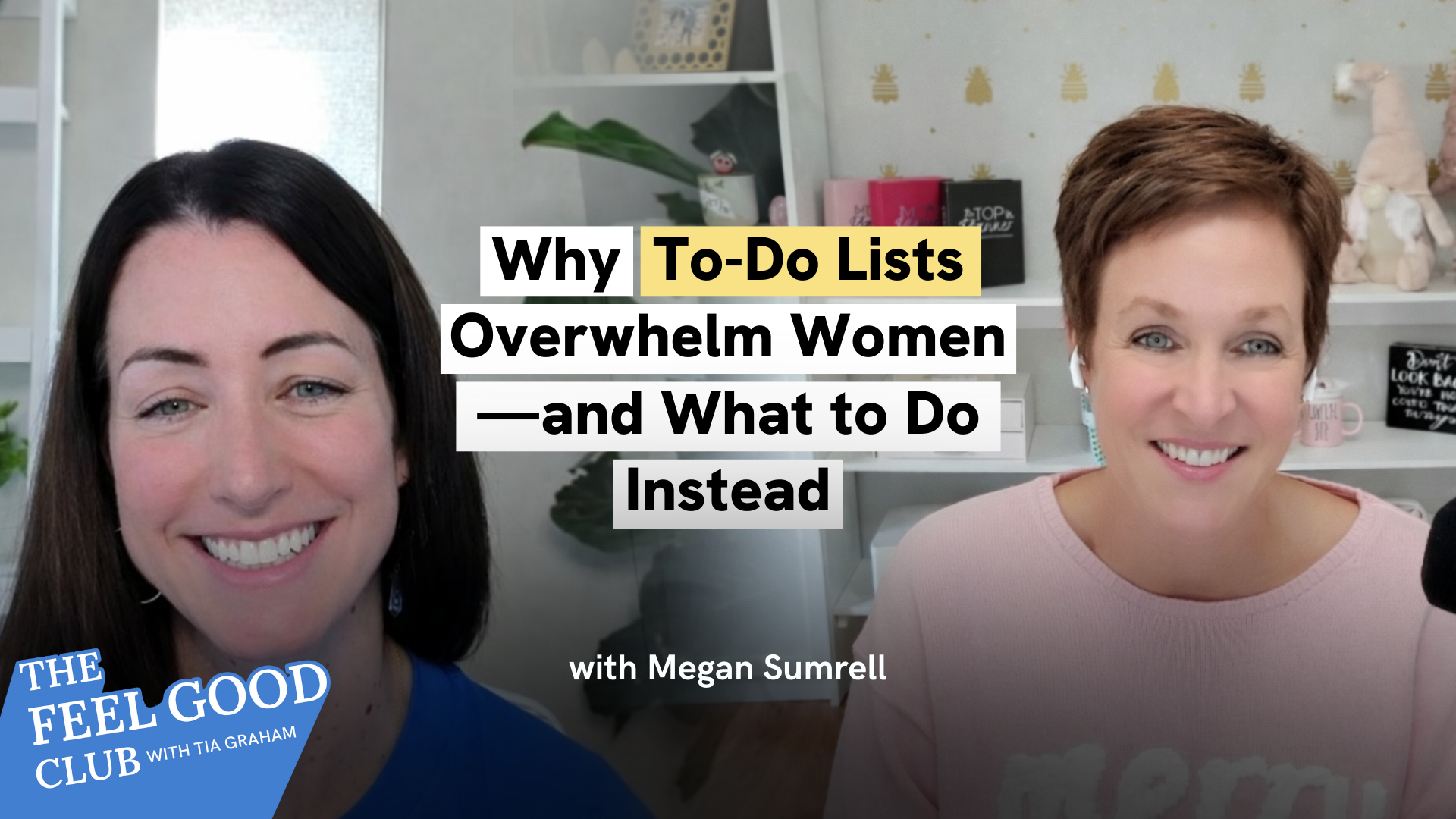



You can break the comparison spiral and feel steady in your choices again.
Here’s how.
In this episode, the conversation starts with a familiar trigger: scrolling social media and feeling like other moms are doing it “better.” Comparison can quickly turn into a self-worth scorecard, especially when you’re ambitious and already carrying a full plate. The goal isn’t to shame the habit, it’s to notice it sooner and stop letting someone else’s highlight reel rewrite your confidence.
The reset is to come back to what’s true for you. Identify your core values, let them guide your calendar, and release the “shoulds” that create guilt and noise. When decisions are anchored in your priorities (not outside expectations), you spend less energy second-guessing and more energy building a life that feels aligned, even when it’s busy.
HERE ARE THE 3 KEY TAKEAWAYS FROM THIS EPISODE:
1️⃣ Comparison isn’t clarity.
2️⃣ Values guide the calendar.
3️⃣ Drop the “shoulds,” lose the guilt.
NOT ALL ON ME TOOLKIT
Grab the FREE NOT ALL ON ME TOOL KIT
This free resource will help you finally make your home life happier and more balanced.
Get the Free NOT ALL ON ME TOOLKIT
“I’m not operating off the to-do list, right, my task list, what am I doing? I’ll always tell people a task list is not the same thing as a plan.”
Guest Appearing in this Episode
Megan Sumrell
Megan Sumrell is a time management and productivity expert who helps women create Work + Life Harmony with a practical planning framework built for real life. She’s the creator of the TOP Program and TOP Planner, and she’s helped thousands of women feel more in control of their days. With a background in systems and process optimization (including over 20 years of experience), she teaches women how to turn chaos into calm without needing perfect conditions first.
Full Transcript
speaker-0 (00:01.944)
Hi, Megan, welcome to the show.
Thank you so much. I am so excited to be here.
So tell the listener a little bit about yourself, your background and your expertise now.
Yeah, so I currently serve today as a time management and productivity expert for women. This is not something I had made a life plan out of in third grade when someone asked me, what do you want to be when you grow up? This was not my answer. I think like a lot of business owners, I fell into building this company out of a need for myself.
So my background was actually in mathematics, studied math in college and landed in the tech world for over 20 years where I served as what was called a software quality architect, which is just another way of saying I'm a really huge nerd. I geek out on processes, systems, optimizations over the course of my career, gathered a bunch of nerdy certifications along the way. And at the end of the day, my goal was to go into
speaker-1 (01:08.078)
typically software teams that were a bit chaotic, as a lot of software organizations are, and revamp all of their processes to get things done with higher quality and better efficiencies. So I'd always like to say, I like to come into chaotic organizations and build very harmonious systems for them that allow them to do what they do the best way possible. And I met my husband later in life. We went through a fertility journey. So we started a family even later and found myself
one very pivotal day. I still wish I could remember who this woman was, but I was at the park on a Friday afternoon. My daughter was around two and a half and I was pushing her on the swings. That was the one thing she would do at the park was get on the swings. And the mom next to me was chatting and randomly in conversation just asked, so what do you do for fun? And I realized I didn't have an answer. And it wasn't that being at the park with my child Friday afternoon wasn't enjoyable.
but I just couldn't remember the last time I'd ever done something just for me, for fun. And I'm so glad she asked, because it set me on, after I had my breakdown about not being able to answer the question, it kind of set me on a, yeah, after I got over that, set me on a journey to be like, well, what am I gonna, like, how did I get here? And then more importantly, how do I get out of here? And it dawned on me like,
this is what you do for a living, Megan. You go in to organizations that have a lot of things they're trying to juggle and do it well, and you redefine how they're gonna get to their end goal the easiest way possible. So I threw out my beloved Franklin Covey planning system of over 20 years, and I got to work. I took myself on as my own client, saying, okay, here's everything we're navigating. How can we create a way to plan and manage my own time in life?
that allows me to always be able to answer the question, what do I do for fun? Because the bottom line was I was missing on my calendar. My entire calendar was in service to every role that I played, whether it was motherhood or employee or wife or daughter or sister. So I ended up kind of defining what is now known as the top framework, which stands for time management, organization and productivity.
speaker-1 (03:27.662)
was speaking at some local tech conferences for women and women started asking like, are you juggling it all? So I started showing bits and pieces of this planning system and a group of women asked if I would kind of work with them privately to teach this to them. So I said, well, sure, no guarantee it's gonna, you I've built this for myself. Let me see if I can get this into a generic enough framework. And I'm so glad those women asked after working with them for three months, I was like,
This is it. This is my calling. So left the corporate world and ended up building what is now known as the Pink Bee. And I'm just on a mission to bring harmony into homes all over the world, supporting women in that space.
Oh my goodness, such a great story. of course, what works for us and whatever we can do to make our lives more organized or increase our well-being. And there's so many working moms listening going, yeah, I definitely could use some more fun, some more joy, me time. everyone is really feeling time poor, know, especially
with you 100 % yeah
Yes. So right before we hit record, we were talking about daily task lists and to-do lists. And I know working mom listening may keep lists on their phone, may have paper lists, may use a sauna, may have shared calendar. And immediately when you said that, I thought, well, there's three big ones. Kids. Actually, I'm to think of four. Kids.
speaker-0 (05:11.064)
home personal
And there's a lot
speaker-0 (05:21.816)
color coded count exactly yes and each kid has their own needs and schedule and everything and you said something to me that really piqued my interest you said you know the daily task list is is not the right way to go so just let's just start off by talking about that and another
I'd love to hear your thoughts. for anyone listening, if you're like, that's it, I'm out. Cause you're like, this woman's telling me to break up with my task list. I promise I will, I will offer what I know to be a much better solution. I think it's important to understand why we even do this daily task list, right? This goes back to the fundamentals of all of the very traditional, what I call masculine time management and planning systems that are out there. And when you go back in time, it look at
and look at where most of these frameworks, like what years we were in when these were being developed, for most of them, this was before even email existed. So we're taking these traditional suggestions and systems that were built by men for men in corporate settings pre-technical revolution. And we're, as women in the world we live in today with technology, with the fact that we're now
equally working, equally providing while still being primary caregivers are still trying to implement systems built 30 some years ago, it's a complete disconnect. And at the foundation of a lot of those systems, I'm sure everyone, if you've Googled like, how can I get out of overwhelm? You will find some form of a message saying, wake up in the morning, do your brain dump, right? Write everything down that you're thinking about for the day.
then someone magically said, identify the top three. Someone said that one day, I still have yet to find out who founded that. And then everyone jumped on that. So we're supposed to circle the top three and then quote, do those first and then get everything else done. And so if you've been doing that, don't blame yourself. It's what 99 % of people are telling you to do. But when we do that, there are three fundamental things that are happening that are keeping us perpetually
speaker-1 (07:34.08)
overwhelmed and some actually have to do with the nuances of the male and the female brain is different. And so that task list serves us differently than it serves our male counterparts. So the first reason why this task list just keeps us in perpetual overwhelm is probably 99.9 % of the time it would be physically impossible, mathematically impossible for you to get everything done on that list for the day. Right. Cause you're probably coming up with
12 hours worth of things, but you only have five and a half available hours.
There's things that pop up too.
Yeah, yeah, we're not going, okay, well, let me make the task list and now let me write down how long each one of these takes and now let me see if it's possible. We're not going that extra mile. So we're setting ourselves up to get in what I call time debt, right? Where you go to bed at night, not everything from the list is checked off. So you feel guilty, right? I didn't do enough. You wake up the next morning already in time debt from the things you didn't check off yesterday. You rewrite those onto today's and then you add more. So you are keeping yourself
perpetually stuck in time debt because you're building something completely unrealistic with a task list.
speaker-0 (08:49.807)
time debt and the belief in thinking that you're in time debt.
Today I'll get today I'll catch up right today. I'll just do it better or I'll work harder You know name the thing that's gonna fix today. It's not going to fix today And so we then the guilt of course compounds with that as well And so we're just stuck in this vicious cycle of truly never getting caught up. So that's a hundred percent
self-criticism.
Because somebody out there on social media is making you believe that they're getting theirs checked off Even though they're probably not either So we're stuck in that vicious cycle and it's important to know Your reason for doing this task list is a good one. It's because you're not wanting to forget stuff, right? But then what's happening as we're building this task list is there's things on there that really don't even need to be
today, right? But you had that thing flashed in your brain, yeah, I've got to get that form before summer camp. You don't need the form for four more weeks, but you don't want to forget. So you're putting it on your list and you're probably rewriting it 26 times before it's the two days before camp. And now you're actually going to get the form, which means for 26 days you have felt like you failed.
speaker-1 (10:08.994)
because you didn't check that thing off your list when it never needed to be there in the first place. But we don't have a system in place for where to put those things. So we just dump them on to today's task list. Now, the second thing that happens with this is really interesting. And I'm sure any woman listening can relate to it's five o'clock at night. The family is deciding what to do for dinner. They're like, let's just go out to dinner because nobody feels like cooking. And then everyone looks to mom and goes,
Where do you wanna go? And all you're thinking is, for the love of God, would someone else just please decide, right? Like, I don't care, I cannot make another decision. Well, operating from a task list every single day keeps you in a perpetual state of decision fatigue. And here's what's happening in our brain. When we wake up every morning, we wake up with a set capacity, if you will.
for really good decision-making skills. Kind of think of it like your gas tank. You wake up with that and you really can't refill it midday. When it's empty for the day, the only way that gets refilled is with restorative sleep. So when you're done, you're done. So if I were standing in front of you, Tia, and holding like an apple or an orange and said, here, which piece of fruit do you want? It'd be a pretty easy decision for you to make. There's two things. You can see them. You'd be like, great, I'll take the orange. Great.
Now, if I stood in front of you with a basket of 19 different pieces of fruit and said, what piece of fruit do you want? That's gonna take you some time, right? You're gonna be looking at all the, don't know, do I want this, do I want that? Then that's making a much bigger decision and it's gonna pull a lot more of that decision making capacity out of your brain for the day than deciding between the apple and the orange.
Well, if you build your task list for the day, that could easily have 19 things on it. I that's not unrealistic for any woman if they combine everything with their life. As soon as you've made the list, what's the first thing that you do? You go look at it to say, what should I do first? And you're looking at 19 things and you're overwhelmed at that, right? And that's a massive decision. So you, you do exactly what your brain is designed to do because now you're overwhelmed.
speaker-0 (12:14.326)
and you're overwhelmed just looking at
speaker-1 (12:26.36)
which means you're in that fight, flight or freeze state that just as if a rabid dog walked in your office or a wolf came at you, same chemical reaction is going on. Well, then your brain's job is to go, I need to feel good. Like I need a dopamine hit. Well, in the form of looking at that long task list, it's like, how can I get the fastest check mark? Lowest hit, not to, yeah, no pun intended with the fruit.
Where's the eat the low hanging fruit?
speaker-1 (12:52.046)
99 % of the time, that's probably the least important thing on your list, right? It's the easiest, quickest win, but your brain's like, I need a check mark. So you get the check mark, and now what are you doing? You're going back to the list, now with 18 things on it. Again, massive decision that you're having to make now what to do next. And we're doing this every single time we go back and look, we're making those micro decisions all day long. This is why as the day goes on,
your decision-making skills just get less and less and less good, if you will. It's why, you know, at nine in the morning, I can avoid the bag of Doritos, but at four o'clock in the afternoon, it's not that I don't have willpower, it's that that part of my brain is done for the day. It's like, nope, that looks good. That's what I'm going to go do. So we stay in this perpetual...
midday through the rest of the night decision fatigue, which makes us irritable. Anytime someone asks us a question, we're annoyed, right? Cause we're tapped out. I have no more decision-making capacity. And then the third kind of subtle thing that happens tied to that lowest hanging fruit, it prevents us from working all oftentimes on those bigger projects or long-term goals.
because those are that need, yeah, the things that actually move the needle. Because we're looking at like, well, gee, I'm working on launching that podcast. Well, I'm not going to do like, that's not where I'm going to start because I'm look, I'm anxious and overwhelmed looking at 19 things and I need a checkmark. That's not how I'm going to get it. So we stay in time debt. We keep hitting decision fatigue every day. And then we get further and further away from progress on our goals because we're stuck in this daily.
to-do list mode and then the guilt, the everything else that piles on because we're not checking it off just keeps going day after day. Now I have met the, I believe the superhuman people out there that can function on three hours of sleep a night, right? And they can power through it, but that's not sustainable nor is that realistic for the vast majority of people.
speaker-0 (14:59.566)
And we need sleep for happiness. That's one of the number one.
And sleep is my favorite. Yes. And people always, when they see, you know, what we do here at the company, I'm like, I need you to understand, like, I get a minimum of eight hours of sleep a night, more on the weekend. I only work four and a half hours a day, less in the summer, because I pretty much work when my daughter's at school. And yet we've built a massive seven figure annual run rate business in very, very small pockets of time. And we do this because of
how we've shifted our planning system. So this is why when I was like, well, if I'm not operating off the to-do list, right, my task list, what am I doing? I always tell people a task list is not the same thing as a plan. So this is where the foundation of teaching women how to create not daily, but weekly and then monthly plans where we're sitting down once. I typically,
depends. I'll do mine either Friday, Saturday or Sunday for the upcoming week. It's not like you got to pick the one time that you do it. You just got to do it prior to the upcoming week. But it is a systematic, I first start teaching people the five step basic weekly planning process. Once you get comfortable with that, then you learn the 10 step. And before you think, Megan, I don't have time for this. I do it in 15 minutes or less every week. But it's where essentially you're looking at all of the things competing for your time.
in the upcoming week across all the roles that you play, work, motherhood, home life, caregiving, all of it. And then, yeah, and yourself, you are part of that process and you are putting together your plan with specific dates and times for how am I going to navigate this week? And then one of the key things that we learned is this concept of planning for uncertainty where we're actually building in space to absorb
speaker-1 (16:53.87)
the phone call that comes at 10 a.m. from the school because the kid is, you know, life that's going to happen, building a plan that allows you to, as the week unfolds, move and shift the pieces around, almost like a game of Tetris, if you will. Absolutely. And it's interesting that you say buffer. People will use like white space or buffer time a lot. They're like, well, just you add buffer time. Yeah, hear white space a lot. Yeah, there's there's three fundamental
there.
speaker-1 (17:23.821)
of differences around, I guess what I would consider white space, because people always say, Megan, I'm leaving white space on my calendar, but I'm still not getting stuff done. Well, what they don't realize is that that one thing of white space is actually competing for lots of different things. So I like to separate them out. So when I talk about planning for uncertainty, what I mean for that is we all have on average, and everyone's is uniquely different, an amount of
Tasks or things are come up during the week that have to be handled each week and it's different for everybody And so I guide people through you actually audit yourself for two weeks each day Okay, how much of my time this day had to go to things? I did not know was going to happen at the start of the week Right and through different seasons of life. It will look different So like when I was in corporate running a support team, I knew I'd have 90 minutes of work every day
for emergency support situations. I wouldn't know when they were gonna hit, but I knew 90 minutes of my calendar had to be protected every day to absorb those. If I booked a day solid, then I'd be staying at work till 10 o'clock at night to handle this, right? So in that stage of life, I had pockets of time every day for that. I know it's coming, but I don't know what it is. Whereas for the last couple years, I've split mine up to where I have about four work hours a week.
things that I know are gonna land in my inbox that have to be dealt with. But I just protect that randomly. Like I may just protect two hours on a Tuesday and, you know, protect an hour or two on a Thursday. So it's not white space. It's me pre-locking in, I know four hours of tasks are coming You're planning for it. Yeah, so that's why I'm like, it's this actual planning for uncertainty versus.
Me going, all right, after this call, I have a 30 minute break before my next one. I'm just leaving that white space.
speaker-0 (19:20.878)
and just like, oh, let me look at the list of 19 things.
Well, I don't even have the list of 19 things because they're all built into the plan. Right. I'm saying, yeah, exactly. So now it's like, hey, get up, walk, go to the bathroom. How many times do we hold it in for four hours? Because we don't, you we feel like we can't. Right. So when there's actual white space on my calendar, it's truly I don't have to do anything right now. I can breathe. I can go walk outside. I can just stare at my Christmas tree if I like, whatever it may be. Yeah.
If you're not going
speaker-1 (19:53.984)
versus the buffer time is something different where maybe you're planning to work on a project and you're not sure how long it might take. I think I can get it done in an hour, but I'm going to protect 90 minutes on my calendar in case I need more time than that.
lot of a lot of projects and deep work. We underestimate the amount of. Being it's not you know it's execution and I'm also a huge proponent and I tell all the my clients and members of the feel good club to also plan for your happiness and your well-being. So you said sleep which I love exercise date nights girlfriend time nature.
100%.
speaker-1 (20:40.078)
something just for you. Like one thing that goes to my calendar every day, which people think is crazy. I always wanted to learn how to play the cello. I had just my whole life wanted to learn how to play the cello. Well, a couple of years ago, I started to take cello lessons. So I have 30 minutes blocked on my calendar every day to go practice my cello. Like that's just for me. I have no end game. I'm not, you know, I'm joining an orchestra or anything like that. But that's that when someone goes, hey, what do you do for fun? I could say I'm
learning how to play the cello. It's really fun and exciting. And that gets the same level of appointment on my calendar as everything else. It's not when I have the time tomorrow. No, it's not when everything else is done. Oftentimes it's in the middle of my work day, because that's when it works best for me. So I'm getting up from my desk and I'm going and doing that for 30, 40 minutes. And then I'm coming back down to my desk again. And this is why actually that
back burner.
speaker-1 (21:37.39)
Personal time is the third thing that goes on your calendar each week It's not the last because if you say I'll take the leftover time You will never have leftover
Yeah. And then you're not going to get, and you're going to be more irritable. You're going to be more stressful, resentful, et cetera. I love this so much. I love the two week audit. Something that my husband I do is actually on Fridays. We now do it every other week. We do a two week planning session together. you do that on Sundays. Yeah. I find we're getting.
And we do that every Sunday.
And we bring our daughter into it as well. she's 15. you know, things and now if he and I are planning something out in the future that doesn't and we'll do that separately. But we use I really love the skylight calendar. I'm sure a lot of moms have heard of that. So we have that set up in our kitchen. I have very strong feelings on what I what I believe belongs on those calendars versus not. I see a lot of families putting way too much stuff on there, which is why no one's looking at it.
anymore because it's too crowded. So what shows up on our Skylight calendar is just things that involve multiple members of our family that require some kind of coordination. So for example, me recording this podcast with you is not on the Skylight calendar. Nobody needs to like that doesn't impact anybody in my family. My husband's work call later today is not on the Skylight calendar.
speaker-1 (23:07.694)
I don't need to know about it. It's not changing my day. It's not changing my daughter's day. It's 100 % his to manage on his own. That's on his calendar. So what's on our skylight calendar, and this is what we're kind of reviewing as a family each week, is like my daughter's school doesn't have busing. So one of us has to, and it's a little over an hour round trip each way. So there's school drop off, there's school pickup every day. That's on the calendar color coded with who's doing the driving.
So we're discussing that on Sunday, okay, who's doing Tuesday afternoon? Then we swap the color outs and our daughter can, if she comes, who's picking me up from school day? It's on the calendar. Like I'm not answering those questions. I will not be the COO for the household. And then if there's something that's unusual. So for instance, this week, I'm gonna be out one evening at a board meeting. That's on the skylight calendar, cause that's not the norm. So the family can see, mom's gone.
Wednesday night, she'll be out in the evening. So it's just the things that are relevant to more than one person and or out of the ordinary that everyone would be like, yeah, okay. Now I know why mom's not here. So it's very, and it's all color coordinated, but because it's not so cluttered with all the stuff, it's very clean and easy for people to see because they're looking for their color and there's not too much in there. And then our dinner is at the top.
such good advice.
So when we sit down on Sunday, okay, what dinners are we doing this week? And those all get plugged in. So no, I am not responsible for answering the question was for dinner.
speaker-0 (24:39.054)
my gosh, so great. my goodness. So Megan, where you've shared so much, I know that you've given me some specific shifts that I can make in terms of planning and really, you know, where you start off was that understanding decision fatigue and how, you know, gets worse during the day. And so just understanding how our brain works and taking the time to
Plan more, be more proactive, and then putting in the priorities, whether it's the priority to play cello or for me, I go for a midday hike or prioritizing date night or a big work project. So all of it was so, so valuable. yeah, and I love what you said about the Skylight calendar, too. Just thinking about it like that is really good. So for everyone listening who wants to
Find you, learn more about you, where should they go?
Obviously, if you're a podcast listener, do have a podcast, Work Life Harmony. Tia's been a guest on that show. So that's on all the podcast players. But I always encourage people, I think a great place if you're interested in learning a little bit more about this planning framework that I teach. I've actually got an app out in the app store and Google Play. It's just called the Pink Bee, all one word. And if you download the app, there's two free mini courses in there, just available for everyone. And I really do break down what does the top framework
look like, what are the four planning levels. And it's just a way for you to get a feel for what this looks like in real life. And I always tell people it's a way for you to kind of get a flavor of does the way I teach even resonate with you, right? Because everybody learns in different ways. So that's typically where I send people off. There's no strings attached, just some really good training content out there for you to go check out.
speaker-0 (26:31.726)
love it. The two framing courses. Well, thank you so much for coming on the feel good club and look forward to talking to you. you.
My pleasure. Same.