
Episode #1 - Dr. Cassie Holmes
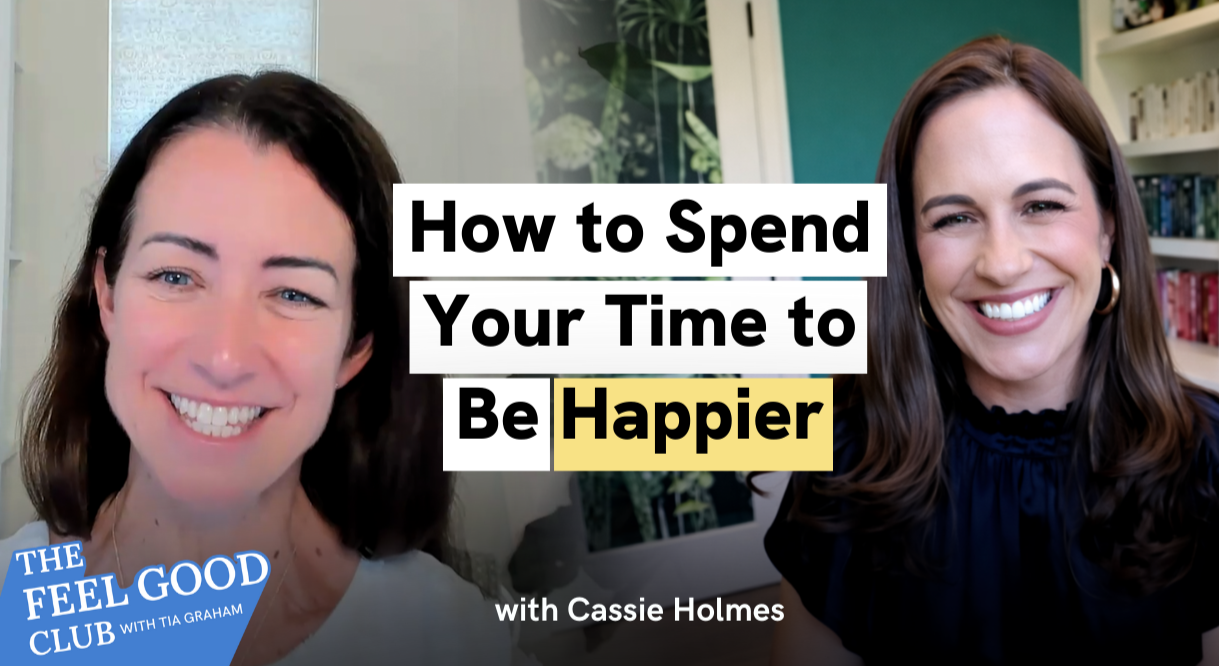
In this episode, we dive deep into how to elevate your wellbeing and achieve success in all areas of your life, while staying aligned with your true purpose. Let’s unpack valuable insights that can transform how you approach your daily routines and long-term goals.
Understanding Time Poverty
As working moms, it’s all too easy to feel overwhelmed and reactive to the demands of daily life. Our guest emphasizes the importance of being intentional with our time, as it is a finite resource that we cannot afford to waste. Time poverty is a real phenomenon that affects many of us, leading to stress, burnout, and a sense of dissatisfaction. The discussion highlights how being proactive rather than reactive in our time management is crucial for our mental and emotional health.
The Importance of Intentionality
Taking control of our schedules means identifying what truly matters in our lives. Rather than rushing through the day, we should focus on activities that align with our values and purpose. The podcast encourages listeners to plan their weeks and months in alignment with their personal goals, instead of getting lost in a blur of tasks. For instance, if spending quality time with family is a priority, scheduling it into your calendar can help ensure that you nurture those important relationships.
Mindset Matters
Another key point raised is the impact of our mindset on how we perceive time. When we feel pressed for time, it not only affects our health but also our relationships and overall happiness. The conversation reveals that acknowledging feelings of time poverty can empower us to shift our perspective and make better choices. This shift can lead to greater fulfillment in both our personal and professional lives.
Protecting Your Time
A practical strategy discussed in the podcast is using your calendar as a tool for protection rather than restriction. By designating specific times for vital activities, such as exercise or family time, you can create a more balanced life. For example, setting aside every Tuesday morning for yoga not only promotes physical health but also mental clarity. The idea is to prioritize what genuinely matters, thereby reducing feelings of stress and increasing overall satisfaction.
Conclusion:
In conclusion, the insights shared in this episode of the Feel Good Club podcast serve as a powerful reminder for working moms to take charge of their time and wellbeing. By being intentional, protecting our schedules, and maintaining a positive mindset, we can lead more fulfilling lives without the burden of time poverty. Remember, how you spend your hours today contributes to the years of your life, so make each moment count.
Key Takeaways:
1. Time is a finite resource; be intentional with how you spend it.
2. Acknowledge feelings of time poverty and shift your mindset.
3. Protect your calendar for activities that align with your values.
4. Prioritize relationships and self-care to enhance overall wellbeing.
“We need to think about how many years we have left and spend our time with intention.”
Guest Appearing in this Episode
Dr. Cassie Holmes
Cassie Mogilner Holmes is a chaired professor at UCLA’s Anderson School of Management, an award-winning teacher and researcher on time and happiness, and bestselling author of Happier Hour: How to Beat Distraction, Expand Your Time, and Focus on What Matters Most.
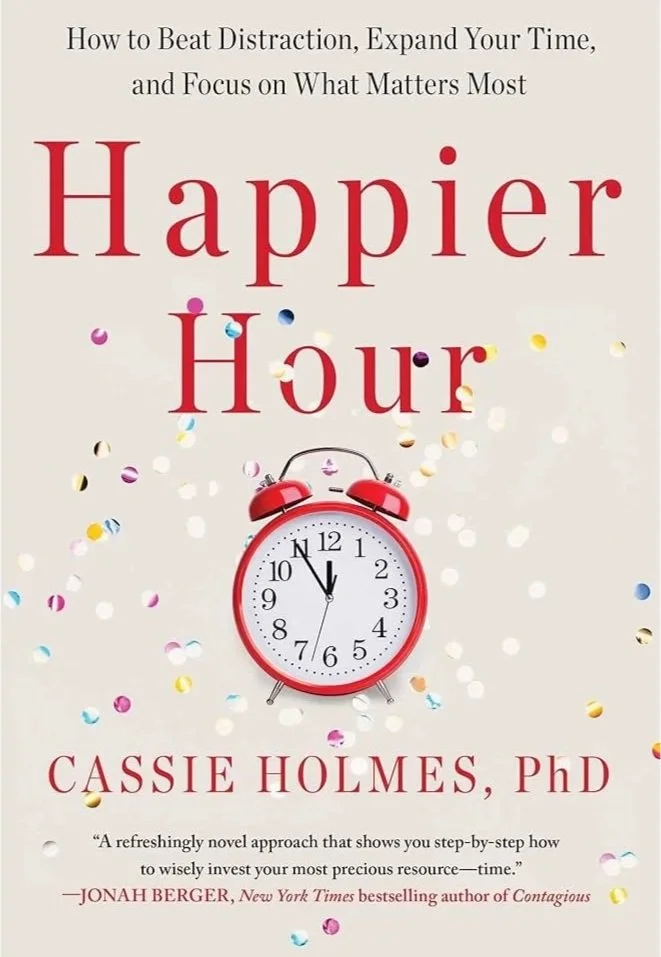
Dr. Cassie Holmes’ Book
Happier Hour
Full Transcript
Speaker 2 (00:00.088)
Welcome to the Feel Good Club podcast. This is the place where ambitious working moms learn how to elevate their wellbeing, increase success in all areas, and create a positive, aligned life. Whether you're here to hear expert interviews or inspiring talks, this is your space to learn and grow. I'm Tia Graham, keynote and TED speaker, bestselling author,
and founder of the Feel Good Club community for high achieving moms. I am an expert in the science of happiness. This show is here to help you feel grounded, happier and connected to yourself and others. I know you are going to love it. Thank you for being here. Let's dive in.
Speaker 2 (00:53.112)
Hi Cassie, welcome.
Thanks for having me.
So let's get right into it. First question. You speak and write about spending time with purpose, being really intentional. So what does this mean practically as a working mom spending your time with purpose?
Yeah. And it's really about being intentional with how we spend our time, because what we tend to do is be reactive in our spending as in demands are coming in and we have this sense that time is passing and we're just trying to keep up that is sort of moving past us with losing all sense of agency of like, wait a second, what is it that matters to me? How do I want to be investing this resource that is so
and so important because how we spend our hours today sum up to the years of our lives. And so we don't want to look back on those years with regret. We don't want to be moving through our days in this blur. And then all of a sudden our kids are going into seventh grade where they don't even want to hug you when you're driving.
Speaker 2 (02:10.604)
Right? I know I was thinking about when they leave the house like
Dude, it's like I was, I used to be like, yeah, college. I still have a few more years, but then when my son is, he's like starting seventh grade this week and he's like, mom, so are you going to drop me off and not get out of the car, please? And I'm like, so anyway.
That was really my plan as well.
So to say that our time is passing, but it's really about the years and the years that come up to life that matter and then spending the hours of today with that purpose, that intentionality, investing in those things that truly matter to us, that fuel us, that sort of.
Cultivate those relationships that are so important that are in line with our individual purpose, which is like that higher-order goal what intrinsically motivates us in Both the work we do but in also how we show up to the world And so it's about intentionality being proactive rather than react
Speaker 2 (03:22.07)
I love it. And making sure that you are really clear on what are those things that align with your values, that fuel you, that connect with your purpose. And then planning aligned with those. Planning your year, looking at your months, so that we don't feel like we're on a speeding train on like we're on car 20, that we're actually.
coming back to that word, yeah, agency. So being totally honest and transparent with you, there I've been a working mom for 11 years and there have been so many times where I have said phrases and sentences like, I never have enough time, I can never get everything done, et cetera. So how does thinking and feeling like this affect us?
this feeling of stressed, rushed, time famished, never have enough time.
Yeah. And you are not alone. We are not alone because it's exactly that. And this is what has really motivated my work in the last 12 years, is that feeling of time poverty, that acute feeling of having too much to do and not enough time to do it. and kids get that. Absolutely.
It's take a lot of time.
Speaker 1 (04:58.158)
And our data shows that we as working moms, so women tend to feel more time for the men, people who work full time, especially if their partner works, tend to feel more time for people who have kids that are in the house tend to feel more time for it. So putting that all together, you and me, we are the most time for it. And it has really negative effects, not only is it pervasive across the population, but it is particularly,
extreme for us. Not only is it pervasive, but the effects are really negative. So it makes us feel and do less. when we feel time poor, it makes us less healthy. So we're less likely to exercise. We delay going to the doctor. We don't sleep as much as we should. We eat fast food because it's fast, not because it's healthy. It makes us...
feel less confident and being able to achieve what we set out to do. makes us less nice when you're in a hurry, you're less likely to slow down and help others out. And it makes us less happy. that lower level of happiness is actually really the big effect there is the higher levels of stress and anxiety that come from it. And with that overall sense of dissatisfaction with our lives. So
And I remember before when we chatted, also the kindness piece. And immediately what came into my head was resentful of maybe people that aren't as time for maybe like our husband, hypothetically.
It is a frustrating thing when we see in the data that even like the men and women who are working similar amount of hours, but the mom feels more time poor than the dad because there are other things other than paid work that contribute more to our sense of time poverty and the sense of obligation and pressure. And we're always thinking about like,
Speaker 1 (07:03.236)
my gosh, all the things that we should and could be doing and planning for what's next, which tends to fall on our loud.
the invisible load also, right? The mental load, right?
Yeah. and so you do see resentment and also you see resentment when you end up spending on some of your time on someone who doesn't seem to appreciate it. Like my seventh grade, it's very salient of like the amount of time I spent like getting his like clothes ordered and the school supplies. Then it's like, here you are ready. And it's like, thanks. Actually is there a thanks? wasn't.
So these sort of sense of resentment that comes from when you're taking on these tasks that others in your household aren't sort of feeling the cost of, then you also see this dissatisfaction.
Our mindset matters, yeah, so, so much. Let's take a quick pause for something that can really support you. If you constantly question if you are good enough as a working mom and desperately want to feel happier, I'd love to invite you to a complimentary discovery call with me. In 45 minutes, we'll get clear on what is out of alignment, what you want your days to feel like,
Speaker 2 (08:30.346)
and two to three simple changes you can make immediately to feel calmer and more confident. It's completely free and it's a chance for us to connect and see if the Feel Good Club for Working Moms or one-on-one coaching might support you. To grab a spot go to tiagram.com forward slash discovery call. That's tiagram.com
forward slash discovery call and pick a time that works for you. So how can we as working moms when and we're in our calendars, everyone I talked to says I live by my calendar. They're planning their days. They're planning their weeks looking at the months, etc. How can we actually think about the year because you teach about zooming out and having this long perspective of well really you talk
You talk about zooming out of our life and then thinking about it in years. I think this is also cultural, right? We're so like day-to-day, calendar, weeks, et cetera, color coding. How can we think about that and then use that to make decisions about our time?
Yeah. And actually, ultimately, we can use our calendars to benefit us as opposed to be like our prison. Yeah. so the first step is identifying what is important to us. What is it that at the end of our years will ultimately matter? Because that zooming out and thinking about our years and our life overall
Let's talk about that.
Speaker 1 (10:16.108)
that helps inform how we should be spending our hours of today. And so there are sort of a couple of exercises that I talk about or like I have my students do in the course. know with the summit, we already talked about the eulogy exercise or interviewing an elder.
I love the interviewing elders about...
Yeah, which is, it's also wonderful for other reasons. It's like really relationship building anyway. but then there's also, exercises that you can do of identifying your purpose of what matters. And, sometimes identifying one's purpose can sound really lofty, and intractable, but actually I have this exercise, the five wise, which
leads us to ask ourselves, like given what you do, and these are working moms, so given what you do for work, why is that important? And then your answer to that is actually digging, well, why is that ultimately important to you? And why is this the work? So you ask yourself for each answer to dig deeper into like what ultimately drives you.
in the work that you do and what we often see is actually what drives us in our work is also what drives us outside of work and really fuels us. And having that clarity of what ultimately matters then says what's important so that we aren't just reacting to what seems urgent. And actually in our data, we found that people who take a broader perspective of their time.
Speaker 1 (12:01.72)
tending to think more about the years of their lives than the hours of today, report greater meaning in their lives, greater satisfaction, less stress in their days, because one of the reasons is because they invest their hours of today in what's important rather than just that reaction. But even if you go to this work of being like, my gosh, I now know what's important to me. I know what my purpose is. what my goals are.
not only a life, but maybe for this year, you know, like my goals in this year to like invest in these particular relationships and this see this outcome of a particular project. Then that means for the calendar of the week, what, how can you actually protect time? And instead of reacting and saying yes or no, and where it goes, you actually
before all the other stuff gets filled in, protecting your time for those particular, the time if it's a particular project that you, it's so easy to put off and so those hours don't get filled by email. Putting it into the calendar of your day, so protecting those few hours for those particular relationships that are so important to you. Also carving out, using your calendar.
Put it in to protect that time for exercise. We talked about this sort of energy giving Yes, of course It's so easy to let that go because as people are asking then it's like that time just gets filled right and so also for those types of activities of like Like Tuesday morning is now my yoga and I protect it with everything and it's in my calendar and since it's in my calendar
and my happy work, it's like I will not respond to email on Monday mornings from nine to noon. That is my deep work that I love so much. Time, and I protect it. And then all the other times will get filled, but at least this way, you have protected time for those things that ultimately matter so that at the end of the week, yes, your schedule is full, but you feel fulfilled.
Speaker 1 (14:17.152)
which is unlike how we usually feel at the end of the week where we're just moving through and getting by. And then we feel burnout because we haven't actually spent the time on those things that matter. Also, sorry, I'm all excited now. When you have put and protected the time in your calendar for those things that really matter, it's really helpful because
You know that that's the time dedicated to it, so you're not in your head thinking about like, what's next? What else should I be doing? You're like, nope, this is the time that I've scheduled for this particular activity.
have you have less of that you have to make less decisions which then brings down the stress and probably just like thinking fatigue also because you've you've been very thoughtful and you know what's going to happen next and what you know you're gonna go tomorrow instead of being like god I need to go to yoga when how
Right, and because I do know that I do need to spend hours responding to emails as part of my work. But since I know that this is a time protected for this work, and then I'm like, okay, I will have, I know that there's other time in my schedule for this stuff that I don't like to do so much, like email. At least I know that it's there, but this is not email time. And when I'm with my...
daughter and my coffee date. I know that this is not work time. And so my mind doesn't wander to all of these other senses of shoulds, like all those other priorities that are absolutely out there. But this is the time dedicated because my calendar says so, you know, for this thing that really matters to me.
Speaker 2 (15:55.918)
And you didn't say it, but you're saying it is presence and there's like mindfulness there. If I'm doing this and I'm not, yes, your monkey mind will always go with, know, it's inevitable. But with that planning and with that alignment of your calendar, I'm present at yoga. I'm present on this coffee date with my daughter or date with my husband or working on this happy deep work, you know, on Mondays.
Which is actually touches back to that very first question of yours of like purpose and time. And it's really about the intentionality of like spending time and intentionally protecting time for those things that matter. But also when you're spending time on those things that matter, paying attention and not having your mind wander or else you might as well have not spent that time. Like the role of distraction.
absolutely undermines not only our enjoyment, but any gain from that time. And so.
of setting up your environment, not having your phone near different things that could distract you when you're doing that deep work or whatever. Yeah, I love it. And something that you've taught me and I just want to say for the listeners of the show is, you know, I always preach that you exercise, you meditate, you spend time with your girlfriends learning all these different
things to be happier and be well so that you can be your best self at work with your kids as a spouse, etc. But what Cassie has taught me also is that it changes our perception of time for the better. And when we do these things playing with your kids and you know, really not not like making dinner for them, like playing with them all these things that are really like life-giving and give us life force. It makes us feel
Speaker 2 (17:57.002)
less time poor. So in addition to like everyone of course wants to be happier but it actually is going to change our perception and you know Cassie talks about self-efficacy so there's so many reasons to protect it and to not say I'll do yoga next week.
Absolutely. Yeah.
Yeah, so I just hit that because I that's I love it.
Yes, and there's the data to support it because as we talked about at the summit interview, this relationship, when we feel time poor, it makes us feel less efficacious, less confident. But also when we feel less of like our self-efficacy is low, it makes us feel more time poor. So it's this sort of loop to each other.
But then if you flip it, when you do something that increases that sense of self and efficacy and agency and sort of it fills you and broadens you, then it also broadens your sense of how much time you have. lessens that limitation. And then you feel like you can tackle a lot more in your day. I continually, like I do this work.
Speaker 1 (19:18.807)
and it helps to like speak about it because I like remind myself. Because the thing that is always the first to go when I'm feeling stressed out and time poor is exercise. That's the first thing I'm like,
So.
Speaker 2 (19:32.974)
for most high achieving moms. It's very common.
And yet when I do it, when even if it requires waking up an hour earlier or a half hour earlier and like maybe even like having the nanny instead of in the afternoon actually come in the morning to take the kid to school so that you can do this. Yeah. When I do that and protect the time in the morning, then
the rest of my day and then I come out of it and I'm like, bring it on. I'm like, whatever new project and I start thinking much more broadly and more with aspiration as opposed to restriction and constraints.
Optimism and yes, yes. And so it's all of us remembering and honoring that. And it's so easy and it's so common. And of course, we don't want to make you feel bad because Cassie and I are saying us too. When you're high achieving and you have and you're very passionate,
ambitious about your work and you're like making the world a better place, you're a leader, et cetera, there's always so much more work you can do, right? The work to do list doesn't, you know, shrink one month and, and, and yet we must do that yoga or play with our kids or go out with girlfriends dancing or whatever it is that fills you up.
Speaker 2 (21:13.824)
so that we don't have because that list of negatives that you talked about, those aren't small, you know, effects on your life. It's a lot. And so it's so, so important.
So let me ask you this. For you, you've shared a little bit, and I'd like to go, I'd like to peer behind the window or the door of Cassie's life. What do you do that makes you feel good as a high achieving mom? And I want to say besides your work, can you tell us about the pieces? Because you, I'm assuming, have thought about your eulogy. You've thought about your long life.
What makes you feel good and what are those? think you talk about the big boulders or the big rocks that you think about. and I want to say this is a way better exercise than a New Year's resolution. Like this is what people should be doing. So I just wanted to put that put that in there too.
Yes, I do think the eulogy exercise and thinking about, you what are those words that you want to be used to describe you? And I will also admit that for some folks, this is a really sort of scary and daunting task because it's like, I don't want to think about my death, but it's actually not an exercise about death. It's absolutely about life and the life that you want to live. And this is the, gives you the clarity to then reflect back.
And over those years to sort of pull out what is ultimately important. For me, having done these various exercises that I have my students do and I tell others to do, with the Five Ways exercise, with my time tracking, which we haven't talked about, with my eulogy, I have identified for me that it is about creating and disseminating knowledge about what makes people.
Speaker 1 (23:11.092)
and then sort of cultivating that happiness in my community. But my most important community are my kids and my husband and my friends. And then I can think about the community more broadly, like my institution. And then I can think about my community more broadly, like including, you know, the strangers passing on the street. But for me, it's absolutely about that.
sense of satisfaction and happiness that sort of comes through me into the way I relate to other people. And so what that, how does that show up in my calendar? Well, it shows up that my weekly coffee date with my daughter, that it is absolutely about that relationship that I have of just being together and chatting and, you know, she has her hot chocolate, I have my fat white.
It absolutely has to do with the yoga in the morning because then that sort of fills me so then I can show it better for those around me. Actually, I've taken up tennis, which has been so fun. I feel, initially I feel guilty, like we all do. It's like, my gosh, is this something that's so indulgent? But no, because I've now recruited a friend to do it with me and it is absolutely about.
play and I got into like flow and then I like show up for all the other things that I do.
And let me ask you when you said guilty because gosh we could do a whole okay our next podcast we're gonna do another one just about that. Time and guilt when you with the tennis is it work guilt, mom guilt or a little bit of both when you think about doing these things for yourself?
Speaker 1 (25:03.508)
It's all of it, right? Because we are conditioned to be like anything that is for us is bad because we have all these other sort of demands and people relying on us. Like our colleagues, my PhD students, know, my MBA students, my kids, my husband, you know. So then it feels like, my gosh, but to your point, and I think what you said before of like, when we spend our time in these ways, it makes us feel like we have more time. And also.
The research is very clear about our happiness is like when we feel happier, it makes us show up better in the work that we do and in the relationships that we have.
as a parent for sure.
So then when I sort of catch myself, like, my gosh, should I be doing this? And I'm like, yes, because then I show up to work and I'm more creative and nicer to everyone around me. And then at the end of the day, like my kids, I'm like way nicer to them. And so I'm like, tennis makes me happy.
to the quality back to the quality of as a work you're not with your kids all the time as a working mom. So that time when you're with them and the goal is not to be happy all the time that we're nobody is a robot right but yeah for more the majority of the time that you're feeling well and you're feeling well from tennis or from doing these different things. So there's so many reasons to do it. So so
Speaker 1 (26:33.166)
But I also will say we've been talking a lot about, and we've been focusing on things to protect time for, which might sound like more things to do, but it's not. It's sort of like, given that there are hours, it's protecting some of those hours for the things that matter. And also this does require, I think we spoke another time about the importance of saying no, because it does require sort of
everything.
Clearing out those things that actually are not contributing to those three words that will be said at the UOG and are not contributing actually to your goals for your projects for that year. There's all of these things that creep into our time that are truly sort of unnecessary. I was going to go so far as to say a waste of time because I
Sometimes they truly are a waste, but that aren't contributing to those things that truly matter. And some of those you just do have to say no to or not dedicate the time. I'm terrible with email, and I have claimed that as it's worth it, that there will be emails that I don't respond to. But ultimately, if it's a question of showing up fully in my
like really important work and showing up fully in those really important relationships and that involves doing tennis so that I'm nice to everyone.
Speaker 2 (28:10.836)
with yourself. Yes, yes. Thank you for saying that and this is also letting go of perfectionism or being this, you know, superhuman. So I appreciate that. How can my listeners find you or follow you? Everyone's gonna get your book happier hour, but how can my listeners find you?
I'm on LinkedIn, Cassie Holmes, on my website, cassiemhomes.com. I learned in my own time exploration that I don't love time on social media. It doesn't make me happy and so I am not on all these other places that I probably should be.
It's great. Well, thank you so much. We will talk again soon.
Awesome, this was fun. Good to see you.
Thank you for joining me on the Feel Good Club show. I hope today's episode left you feeling inspired and equipped to take on your day with confidence, self-love, and joy. If you enjoyed this episode, please subscribe, leave a review, and share it with your fellow ambitious working moms. Remember, you are not alone on this journey.
Speaker 2 (29:24.93)
We're all here to support each other in feeling good and living our best lives. Until next time, take care and be hopeful. And remember, prioritize your happiness.